
Last updated November 4, 2026
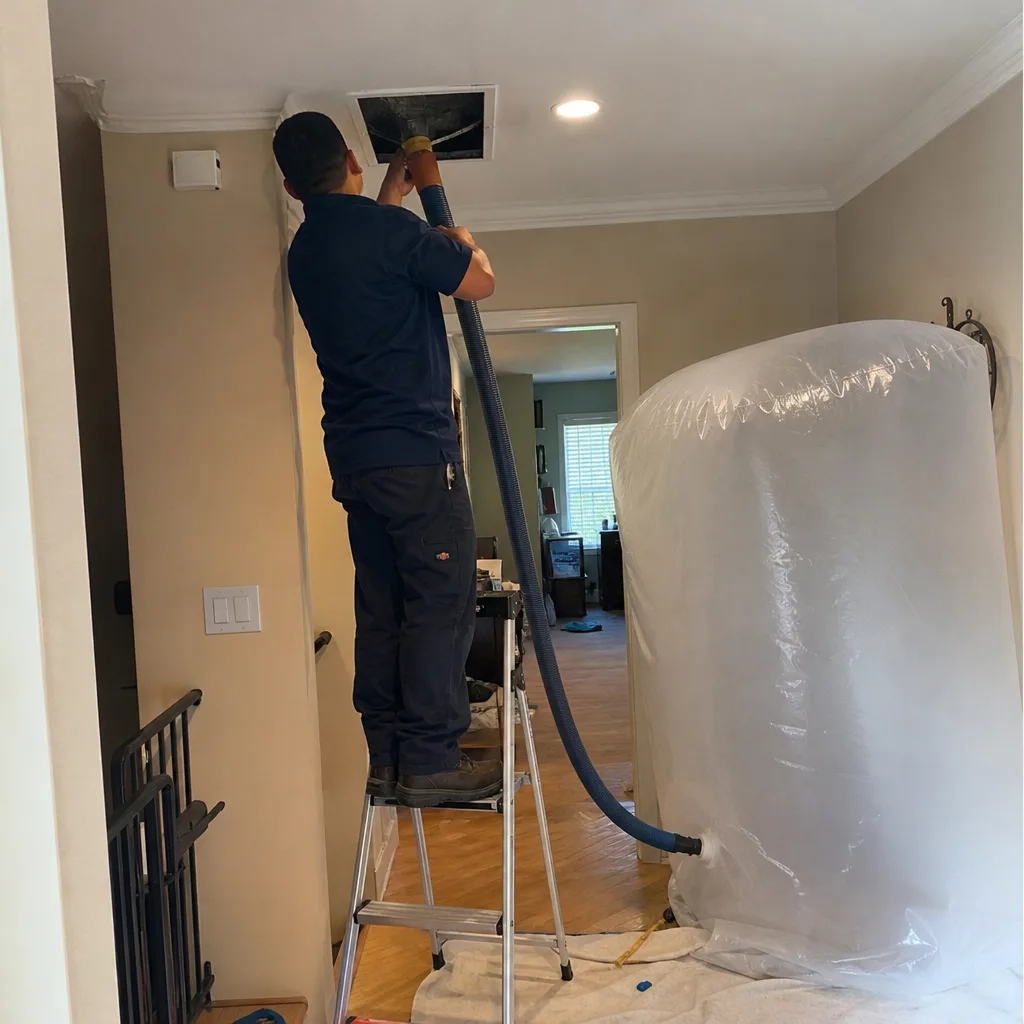
 Whole-home duct cleaning
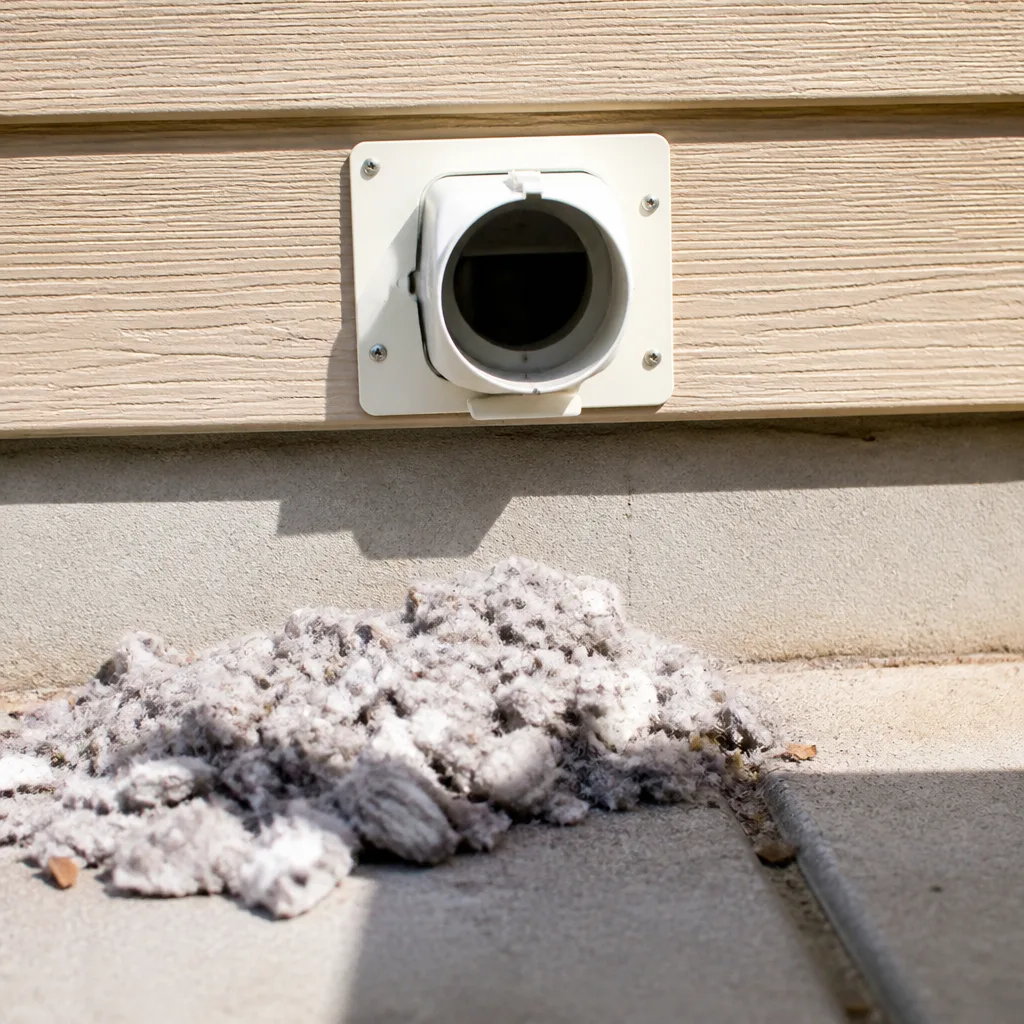 Dryer vent cleaning
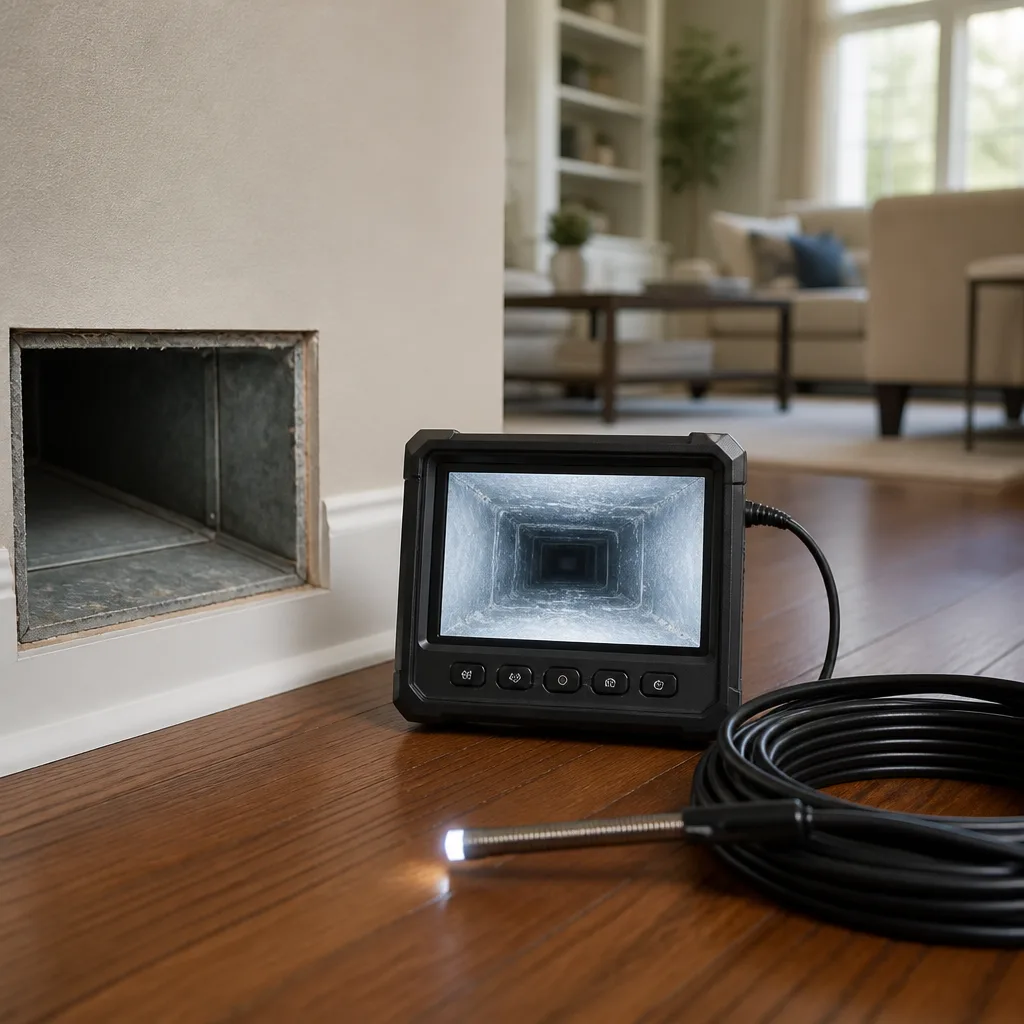 Camera inspection
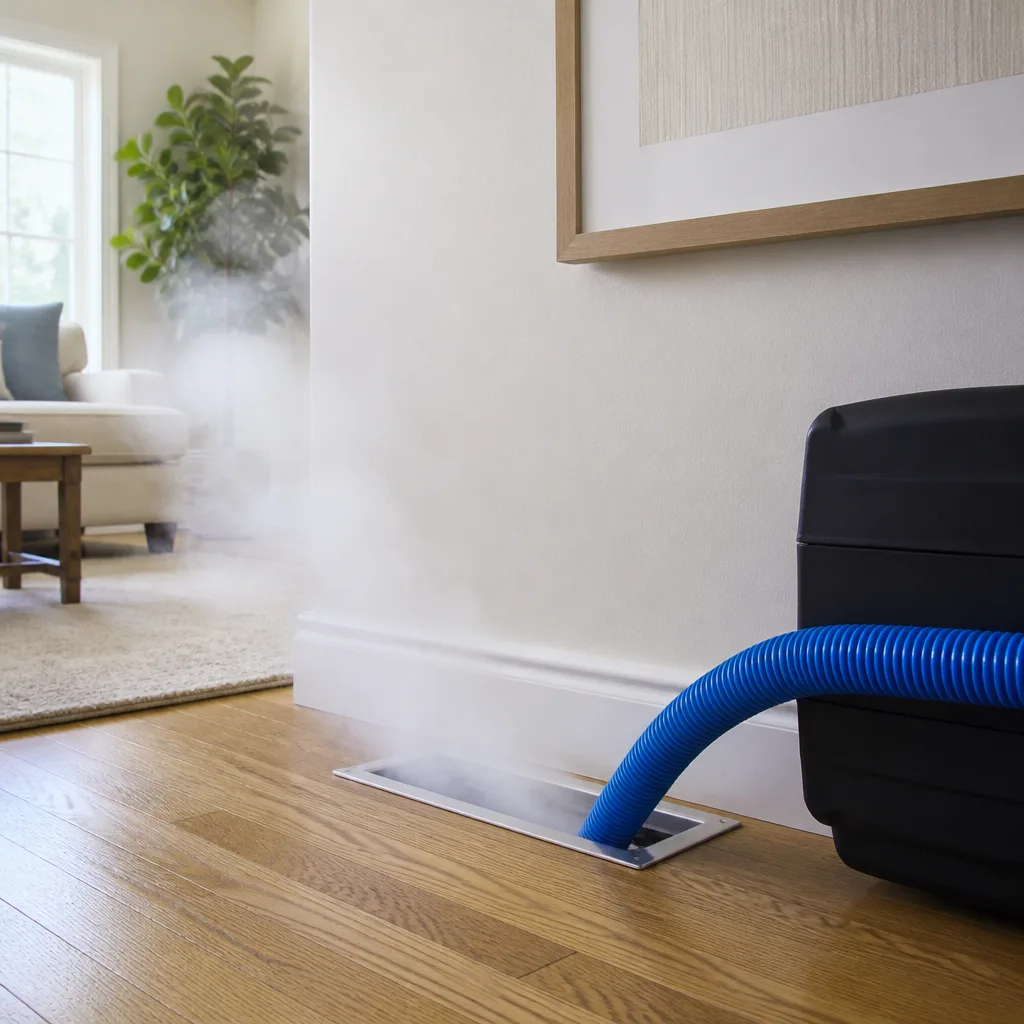 Sanitizing & deodorizing
Whole-system duct and dryer vent check with before-and-after photos - you see exactly what came out of your vents
That "$99 whole-house special" is a bait ad - the real number appears once they are in your hallway, or the "clean" is a shop-vac at the register. We photograph the inside of your ducts before and after instead.
Seasonal Air Duct Cleaning Care for Redondo Beach: Year-Round Homeowner’s Guide
Most seasonal duct cleaning advice assumes four textbook seasons: spring pollen, summer humidity, fall leaves, winter furnace dust. Redondo Beach doesn’t work that way. What we actually get are three distinct HVAC stress periods – the marine layer, Santa Ana wind events, and occasional wildfire smoke – and each one contaminates ductwork in a different way. If you’re cleaning on a generic “once a year” calendar, you’re likely responding to the wrong contaminant at the wrong time. This guide explains what actually builds up in Redondo Beach ducts, when it happens, and how to build a cleaning cycle that matches the real contamination calendar instead of a national marketing schedule.
Quick Answer
In Redondo Beach, air ducts need attention on a seasonal trigger basis rather than a fixed annual schedule. The three real contamination events are marine layer humidity (May through August), Santa Ana wind particulate infiltration (October through March), and wildfire smoke incursion (typically late summer and fall). A two-year professional cleaning cycle, with post-event inspections after major Santa Ana or smoke events, keeps ductwork healthier than a blind once-a-year cleaning. Call (877) 358-4828 for a free estimate and an honest assessment of whether your ducts actually need work right now.
Styles & brands we work with
- Whole-home duct cleaning
- Dryer vent cleaning
- Camera inspection
- Sanitizing & deodorizing
Table of Contents
- Marine Layer Season: Humidity and Duct Liner Mold (May – August)
- Santa Ana Wind Season: Particulate Infiltration (October – March)
- Wildfire Smoke Protocol: When to Run, When to Seal, When to Inspect
- Pre-Summer AC Startup: Coil and Blower Wheel Inspection
- Building a Two-Year Cleaning Cycle Around Redondo Beach’s Actual Seasons
- Why Equipment Matters: Source Removal vs. Agitation
- The Repair Connection: What Cleaning Reveals
- The Dryer Vent Angle: A Seasonal Fire-Safety Check
Marine Layer Season: Humidity and Duct Liner Mold (May – August)
Redondo Beach’s late spring and summer nights bring the marine layer – cool, damp air that settles in through the evening and burns off by mid-morning. For your ductwork, the problem isn’t the outdoor humidity itself. It’s what happens when that cool, moist air gets pulled through leaky return chases and duct joints in unconditioned spaces. When humid air meets the cooler surfaces inside duct runs, condensation forms. Duct liner – the fiberglass insulation material inside many return ducts – absorbs that moisture and becomes a substrate for microbial growth. This is the slow, invisible contamination that builds through May, June, July, and August.
What homeowners notice during this period: a musty smell that appears when the AC first kicks on, subtle allergy symptoms that don’t match outdoor pollen counts, and visible dust accumulation around supply registers even though windows stay closed. These are all signs that the duct environment itself, not just the air passing through it, has changed. The marine layer season is also when we see the highest number of calls for air duct cleaning that turn out to involve liner staining – and sometimes liner repair – rather than simple dust buildup.
What you can do during marine layer season without calling a professional:
- Check return grilles for condensation. If return grilles in closets or hallways feel cool and damp in the early morning, moisture is likely reaching the duct interior.
- Inspect the air handler area. Look for visible moisture or staining on the cabinet and surrounding surfaces. A sweating air handler cabinet in July means the interior coil and blower are operating in a high-humidity environment.
- Note when the musty smell appears. Musty odor that appears only during AC start-up, then fades after a few minutes, points to duct surface contamination rather than continuous indoor mold.
- Run the fan during morning hours. Circulating air during the marine layer’s peak can reduce interior condensation, but it won’t remove mold that has already established itself on liner material.
In our experience, marine layer season is the least intuitive contamination period because there’s no visible dust event. Nothing blows in; the system just quietly becomes a better environment for microbial growth. The professional response is source removal – physically dislodging what’s growing on the liner – followed by an assessment of whether the liner itself needs repair. A cleaning-only pass that leaves damaged liner in place guarantees the problem returns by the following summer. This is a core part of what we mean when we say we clean it and fix it: the cleaning reveals what’s wrong, and the repair prevents recurrence.
Santa Ana Wind Season: Particulate Infiltration (October – March)
Santa Ana winds push fine desert particulates through every gap in a Redondo Beach home’s envelope – and they do it fast. Within 48 hours of a sustained Santa Ana event, fine dust, ash, and PM2.5 particles find their way into attic spaces, wall cavities, and duct runs. Homes with older ductwork, unsealed returns, or panned joist returns in crawlspaces are the most vulnerable. The particulate doesn’t need an obvious entry point; negative pressure from the HVAC system pulls it through seams and joints that look fully sealed to the naked eye.
The infiltration pathway matters because it determines what’s actually in your ducts after a Santa Ana event. This isn’t household dust – dead skin cells, fabric fibers, pet dander – that accumulates slowly. It’s mineral dust from the desert, fine enough to stay suspended in the air column and pass through standard fiberglass filters. Once inside the duct system, it coats the interior surfaces, blower wheel, evaporator coil, and return plenum. This is the dust you see on furniture two days after a wind event, even when windows stayed shut the entire time.
When to inspect after a Santa Ana event versus when to wait:
- Inspect within a week if: you saw visible dust on window sills or furniture during the event, your HVAC ran during the strongest winds, or you have an older system with known duct leakage.
- Wait and monitor if: the event was brief (under 12 hours), your system was off during peak winds, and you see no immediate evidence of infiltration.
- Clean after multiple events: if two or more significant Santa Ana periods occurred within a 60-day window, the cumulative load usually justifies a professional assessment even without dramatic visible dust.
The practical question homeowners ask is whether a post-Santa-Ana duct cleaning is precautionary or necessary. The honest answer: it depends on what the inspection finds at the air handler. If the blower wheel is visibly coated, the evaporator coil has dust embedded in the fin surface, or a swipe test inside the supply plenum comes back with gritty residue, the cleaning is warranted – not as a precaution but as a correction. Fine mineral dust on the evaporator coil reduces heat transfer efficiency directly. The system works harder to produce the same cooling, and the dust continues to shed into the airstream every time the blower runs.
Our Duct Cleaning Redondo Beach approach uses a Rotobrush rotary-brush system to physically dislodge this fine particulate from duct walls, combined with Nikro HEPA vacuum equipment that captures it at the source. The “capture at the source” point matters with Santa Ana dust specifically because it’s so fine. Agitating it without adequate capture pushes it back into the living space, which defeats the entire purpose. Abatement Technologies air filtration deployed on-site during every cleaning contains what the brush dislodges.
Wildfire Smoke Protocol: When to Run, When to Seal, When to Inspect
Wildfire smoke incursion is the most confusing contamination event for Redondo Beach homeowners because the official guidance – stay indoors, run the AC – doesn’t always match what the HVAC system is actually doing. When outdoor air is smoke-saturated, running the system can either protect you or make indoor conditions worse, depending on filter type, duct condition, and outdoor air intake configuration. The key variable is whether smoke particles are entering the return side of the system through duct leaks or outdoor air intakes.
During an active smoke event, here’s the protocol we recommend:
- Confirm the filter situation first. A standard MERV 5-8 fiberglass filter will not capture smoke particulate effectively. A MERV 13 filter, or a filter with activated carbon media, is the minimum for meaningful smoke protection during the event.
- Run the fan continuously, not intermittent. Continuous low-speed fan operation keeps air moving through the filter instead of letting particulate settle inside ducts during off cycles. Intermittent operation allows smoke to settle on duct surfaces, where it becomes a persistent source.
- Seal outdoor air intakes. If your system has a fresh-air intake or economizer, close it during heavy smoke events. Outdoor air intakes bypass the filter path and pull smoke directly into the duct system.
- Plan the post-event inspection before the smoke lifts. After any sustained smoke event (24+ hours of visible smoke impacting Redondo Beach), schedule a professional inspection. Residue from wildfire smoke is acidic and sticky; it doesn’t behave like typical dust. It adheres to coil surfaces, blower wheel blades, and duct interior.
Activated carbon filters are the right emergency response for smoke events because standard HEPA and high-MERV filters capture particulate but do little for volatile organic compounds and odor. The catch: carbon filters have a limited lifespan and lose adsorption capacity quickly under sustained smoke load. If you use an activated carbon filter during a smoke event, plan to replace it when the event ends, not when the packaging says the filter’s nominal life is up. In terms of whole-home filtration products, we’re familiar with Honeywell and Aprilaire IAQ systems and can discuss filtration upgrades as part of the broader indoor air quality picture – but the immediate smoke response is filter management, not an equipment purchase.
Post-event duct inspection criteria:
- Visible residue on supply registers: brown or gray film around register openings indicates smoke residue passed through the system.
- Persistent smoke odor without visible smoke: odor that lingers for more than two weeks post-event suggests residue inside ducts, not just on surfaces.
- Coil inspection: a fine layer of sooty residue on the evaporator coil surface is the single clearest indicator that smoke entered the duct path and needs professional removal.
Pre-Summer AC Startup: Coil and Blower Wheel Inspection
The heaviest cooling season in Redondo Beach doesn’t align with the calendar summer. The marine layer keeps May and June cool, so the real push comes July through September, when inland heat builds and the ocean influence weakens. That’s the window when the AC runs hardest – and when a contaminated evaporator coil or dust-loaded blower wheel costs the most in efficiency. The time to inspect and clean these components is before the heavy runtime begins, not in the middle of it.
What to check at the air handler before the first real cooling run:
- Evaporator coil face: if the coil looks gray, fuzzy, or coated rather than clean metal with visible fin edges, airflow and heat transfer are already compromised. Coil cleaning is not a duct cleaning afterthought; it’s where most efficiency loss lives.
- Blower wheel blades: curved blades accumulate a fine layer of dust and, in Redondo Beach’s marine layer months, sometimes a tacky residue. A loaded blower wheel moves less air per watt, which means longer runtimes and higher bills with no comfort improvement.
- Condensate drain and pan: standing water or visible biofilm in the drain pan during marine layer season means the pan is not draining correctly. This is a mold source that feeds directly into the airstream.
- Filter condition and fit: a filter that doesn’t fit the rack properly lets air bypass it entirely, which means the coil and blower see unfiltered air. This is common enough that we mention it in nearly every pre-season inspection.
The pre-summer check is different from a full air duct cleaning. It’s a targeted assessment at the point where duct contamination visibly accumulates. If the blower wheel and coil are clean, the rest of the system is probably fine. If they’re loaded, the ducts themselves are carrying that same contaminant load, and a full source-removal cleaning is the right next step. The efficiency argument is straightforward: a clean coil transfers heat efficiently; a dirty coil runs hotter, cycles longer, and costs more for the same indoor comfort. That’s true whether the system is two years old or fifteen.
Building a Two-Year Cleaning Cycle Around Redondo Beach’s Actual Seasons
The National Air Duct Cleaners Association recommends cleaning every two to three years under normal conditions. Redondo Beach isn’t normal in the way that matters: we have three distinct contamination events, and they don’t cancel each other out. A home that experiences a heavy Santa Ana season followed by a wildfire smoke event, then a wet marine layer summer, accumulates three different contaminant types in 18 months. That’s the argument for a two-year professional cycle here, not a generic annual schedule, as the baseline for occupied homes.
Here’s a practical two-year calendar for Redondo Beach:
- Year 1, late spring: full source-removal duct cleaning. This clears winter Santa Ana particulate before marine layer humidity can bind it to duct surfaces.
- Year 1, fall: visual inspection only. Check registers, blower wheel, and coil after the summer cooling season. If a significant wildfire smoke event occurred, upgrade this to a full cleaning.
- Year 2, late spring: if no major events occurred, extend to visual inspection plus coil and blower cleaning. If last year saw heavy Santa Ana or smoke events, do a full cleaning again.
- Year 2, fall: the reset point. By now, the system has been through two marine layer seasons, at least one Santa Ana season, and possibly a smoke event. Schedule the next full cleaning for the following spring unless conditions demand earlier action.
This cycle isn’t rigid. Homes with pets, allergy-sensitive occupants, or older duct systems with known leakage will benefit from shorter intervals. Homes that seal ductwork and maintain good filtration can sometimes extend beyond two years. The important shift is moving from “annual because the mailer says so” to “season-triggered because contamination events are observable and dateable.” You can’t put a date on a Santa Ana event next October, but you can note it when it happens and make an inspection decision based on what it actually deposited.
Professional equipment matters on a two-year cycle for a simple reason: the cleaning has to actually remove what accumulated over 24 months, not just disturb it. A Rotobrush rotary-brush system physically dislodges debris from duct walls; Nikro HEPA vacuum equipment captures fine particulate at the source; and Abatement Technologies air filtration on-site contains dislodged contaminants so they don’t redeposit throughout the house. The alternative – a shop vac connected to a spinning brush – agitates without capturing, which leaves the same particulate loose and mobile, ready to contaminate the living space the moment the blower starts.
Why Equipment Matters: Source Removal vs. Agitation
Most homeowners can’t tell the difference between a real duct cleaning and an agitation pass until weeks later, when the dust settles back onto the same furniture. The difference is in the tooling. Source-removal cleaning physically dislodges debris from duct walls and extracts it from the system entirely. Agitation-heavy methods push debris around, loosen what was adhered, and rely on the system’s own airflow to carry it out – which means a portion of it exits through supply registers and into the living space.
Professional-grade equipment, not shop-vac shortcuts, is the entire methodology.
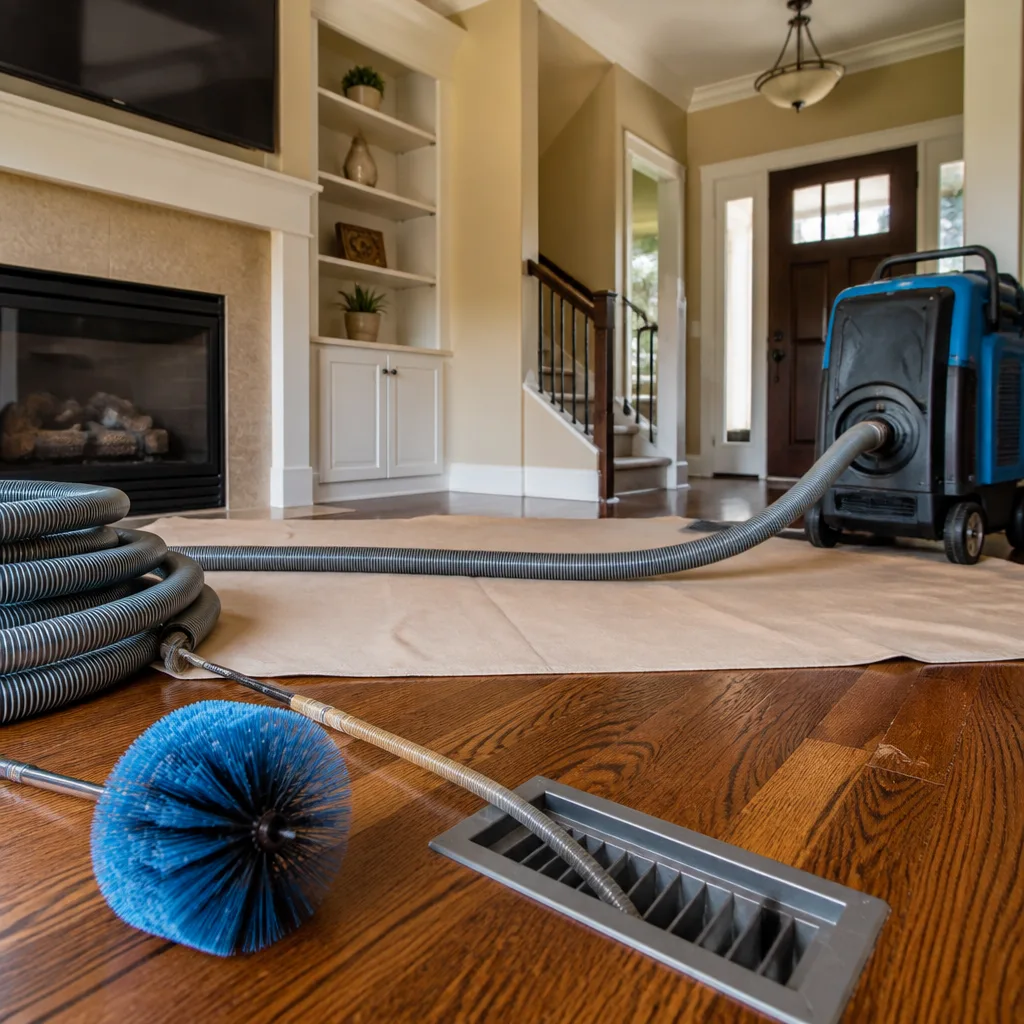
- Rotobrush rotary-brush system: mechanically scrubs duct interior surfaces, breaking the adhesion between particulate and duct wall. This matters most in the return side, where fine dust packs into the liner surface and doesn’t release under airflow alone.
- Nikro HEPA vacuum equipment: captures what the brush dislodges at the point of agitation. HEPA filtration means the vacuum exhaust doesn’t reintroduce fine particulate into the indoor air during the cleaning process itself.
- Abatement Technologies air filtration: runs on-site during cleaning to capture anything that escapes containment, preventing dislodged contaminants from recirculating through the living space while work is underway.
- Guardsman-brand products: incorporated into the service process for post-cleaning surface treatment and ongoing protection in appropriate applications.
Cleaner air is the outcome, cleaner ducts are the method. The reason we name the equipment isn’t to impress – it’s to make clear that the job is being done with tools designed for source removal in residential duct systems, the same tools used by commercial HVAC contractors, not consumer-grade alternatives adapted for the purpose. When another quote comes in substantially lower, the question to ask isn’t “why are you cheaper?” but “what are you actually doing inside the ducts, and how are you capturing what you dislodge?” The answer tells you whether it’s a source-removal cleaning or an agitation pass with a hopeful ending.
The Repair Connection: What Cleaning Reveals
Cleaning and repair are the same conversation. A cleaning-only contractor has an incentive to overlook duct damage, because reporting it means either losing the job or admitting the cleaning will be incomplete. We don’t have that conflict: we offer air duct repair alongside cleaning, one crew, full scope. When the Rotobrush system traverses a duct run and encounters a separated joint, a crushed flex duct, or a corroded section, the correct response is to fix it, not to clean around it.
What cleaning typically reveals in Redondo Beach homes:
- Separated joints in unconditioned spaces: ducts in attics and crawlspaces shift over time as the building settles and as Santa Ana winds exert pressure cycles. A separated joint pulls attic or crawlspace air into the return side of the system, which is how fine dust and insulation particles enter the duct stream.
- Crushed or kinked flex duct: flex duct gets compressed during storage access, insulation work, or cable runs in attics. A crushed flex run reduces airflow to that branch and creates a low-pressure zone that draws in unconditioned air.
- Damaged duct liner: the marine layer mold issue we discussed earlier leaves liner material stained, delaminated, or structurally degraded. Cleaning doesn’t restore liner integrity; repair does.
- Thin-wall duct corrosion in crawlspace environments: older galvanized duct in high-humidity crawlspaces develops pinhole leaks over time. These are inefficient and introduce crawlspace air – with all its particulate and humidity – into the conditioned space.
The point of combining cleaning and repair isn’t to upsell. It’s to remove the structural vectors that re-contaminate ducts within months. Clean ducts attached to a leaking return will not stay clean. You can run the best source-removal process in the industry, and if the system is pulling attic particulate through a separated joint three feet from the air handler, the next Santa Ana event will reload the entire supply side. Repair is the long-term play. Cleaning is the reset. Both are required for a duct system that actually performs.
The Dryer Vent Angle: A Seasonal Fire-Safety Check
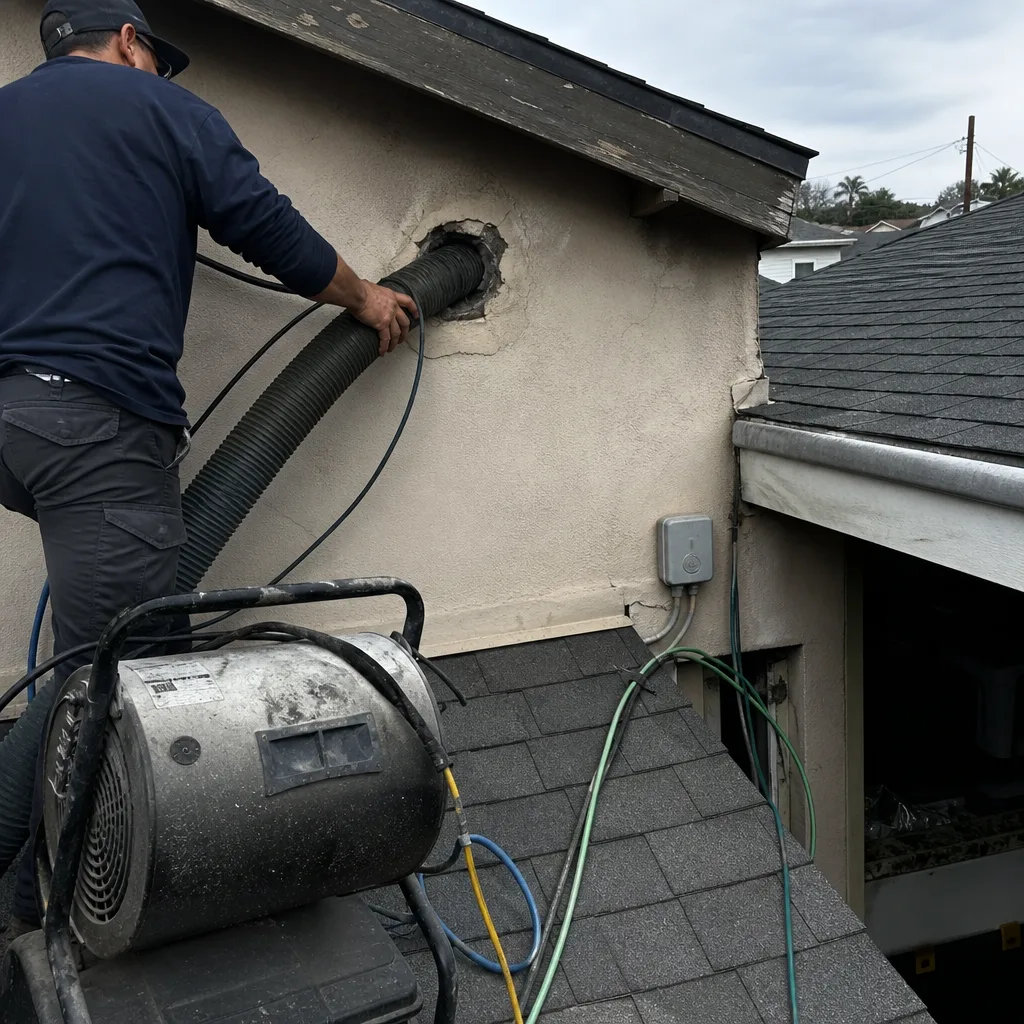
Dryer vents are technically separate from HVAC ducts, but they’re a seasonal safety item in the same household, and the failure modes track the same contamination calendar. Lint accumulates year-round, but the fire risk spikes in two seasons: fall, when Santa Ana winds create low indoor humidity that makes lint more easily ignitable, and winter, when heavy flannel and blanket loads generate more lint per cycle. Dryer vent cleaning is a source-removal job using the same Rotobrush and Nikro methodology, applied to the smaller, more restrictive vent path.
What a seasonal dryer vent check looks like:
- Observe the exhaust flow at the exterior termination. Weak airflow, even on high heat, means restriction somewhere in the vent run.
- Check for visible lint accumulation around the exterior termination. Lint buildup at the exit point means buildup inside the run is heavier.
- Note extended drying times. Clothes that need two cycles in October when they dried in one in June indicates a restriction, and the cause is almost always lint accumulation in the vent or a partially blocked termination.
- Inspect the transition duct behind the dryer. Flexible transition duct is a common lint trap and the most frequent ignition point in dryer fires.
The connection to duct cleaning is functional: a clogged dryer vent pushes moisture and lint particulate into the laundry room, which the HVAC return in close proximity can pick up and distribute. The two systems are only separate in name. In practical terms, a home with dirty dryer vents and clean HVAC ducts is still circulating laundry byproducts through the conditioned space. One crew, full scope means we handle both during the same visit rather than coordinating two separate vendors for interconnected problems.
Common Mistakes to Avoid
- Cleaning on a fixed annual schedule without inspecting first. In Redondo Beach, the contamination timeline isn’t calendar-driven. Two consecutive heavy Santa Ana seasons may require cleaning in 14 months; a mild year might stretch 30 months. Inspect first, then decide. A professional inspection with photographic evidence beats a schedule you never questioned.
- Running the HVAC during a heavy smoke event with a standard filter. A fiberglass MERV 5 filter offers effectively no protection against wildfire smoke particulate. If you’re going to run the system, upgrade filtration to MERV 13 or activated carbon first. If you can’t, seal the system and use standalone HEPA filtration until the smoke passes.
- Ignoring the marine layer because “it’s just humidity.” That humidity is the precondition for the mold issue. By the time you notice a musty smell, the duct liner has likely been thriving for weeks. The right response is an inspection during or just after marine layer season, not a shrug.
- Assuming leaky ducts will “work themselves out.” Duct leakage is a mechanical failure, not an operating characteristic. Separated joints and crushed flex runs get worse over time as pressure cycles and building settlement continue. The efficiency loss compounds every month.
- Choosing a cleaning contractor based on the lowest bid without asking about equipment. The difference between a shop-vac agitation pass and true source removal is measurable in how much dust returns to your furniture within a month. Ask what equipment is used and whether on-site air filtration is deployed during the job.
- Skipping the pre-summer coil and blower inspection. Every summer, the system runs harder than it did in spring. Discovering a packed blower wheel in August, when cooling demand is at its peak, is the worst possible timing. The check costs less than the efficiency loss you’ll carry through the season.
- Treating dryer vent maintenance as optional. Lint fire risk is seasonal and real, and the same team that handles HVAC ducts should be handling dryer vents. The failure modes are interconnected, and fixing one while ignoring the other leaves a gap in the same envelope.
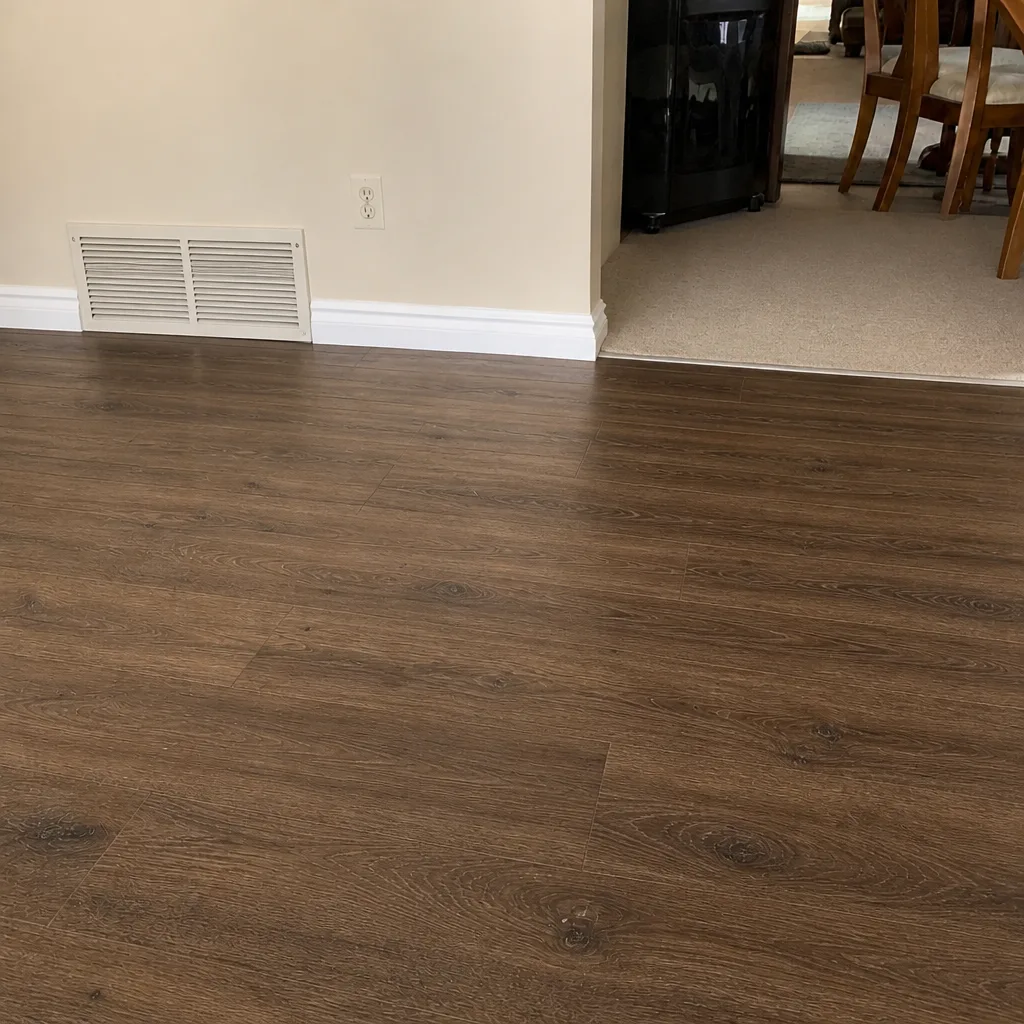
See the difference
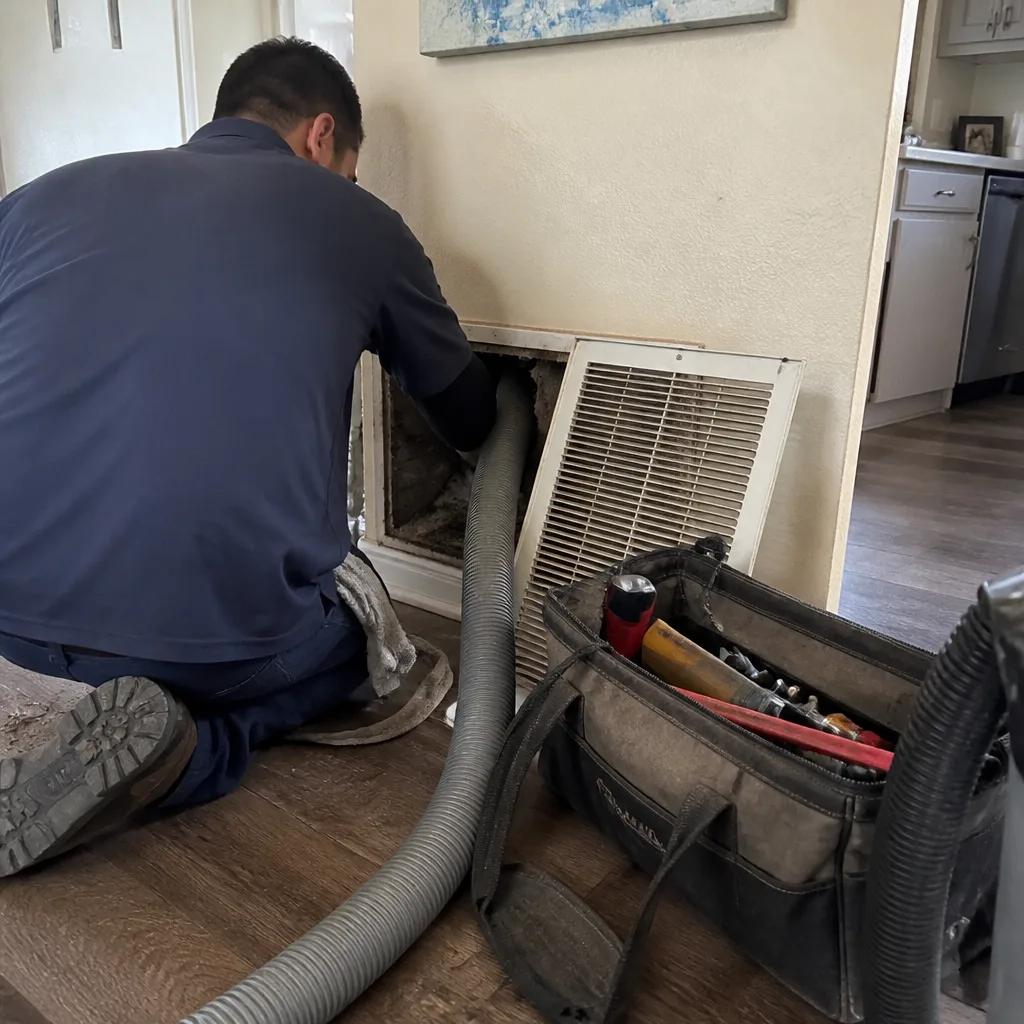 Before
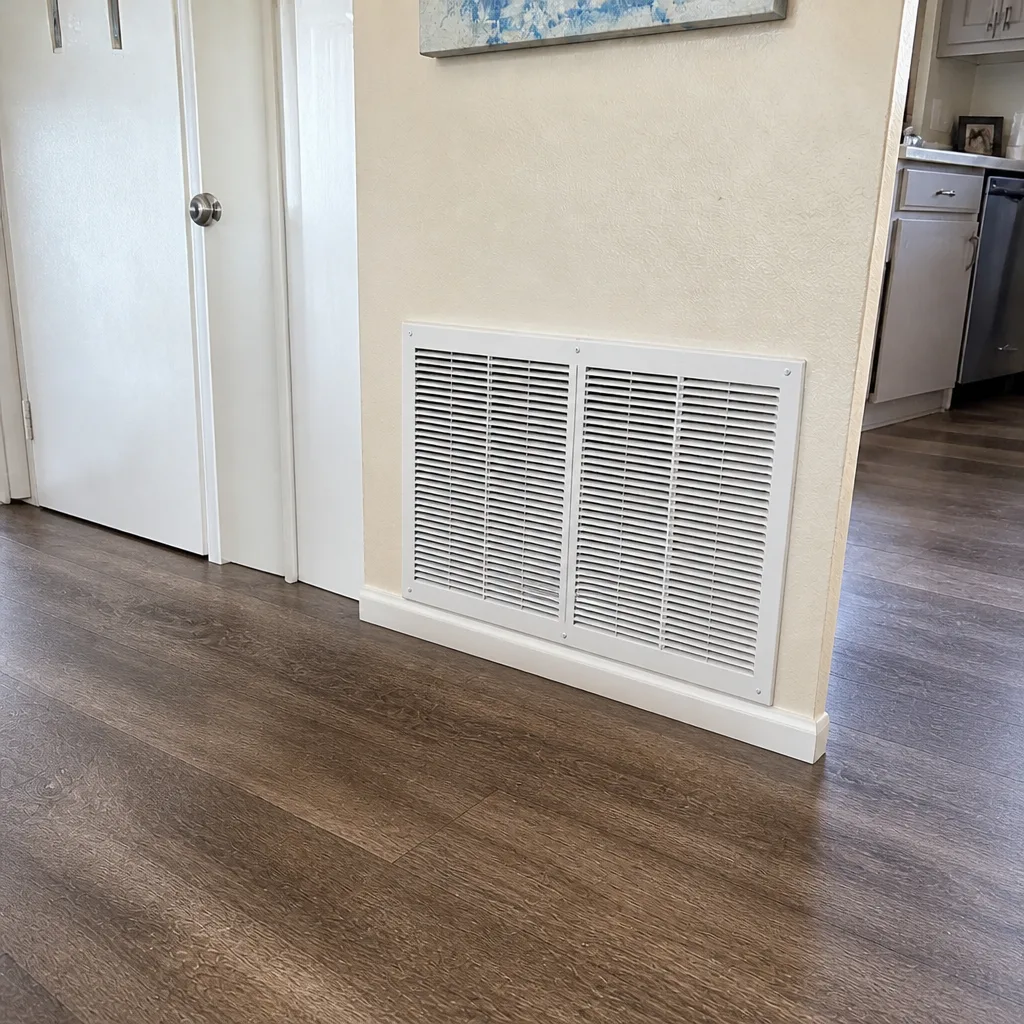 After
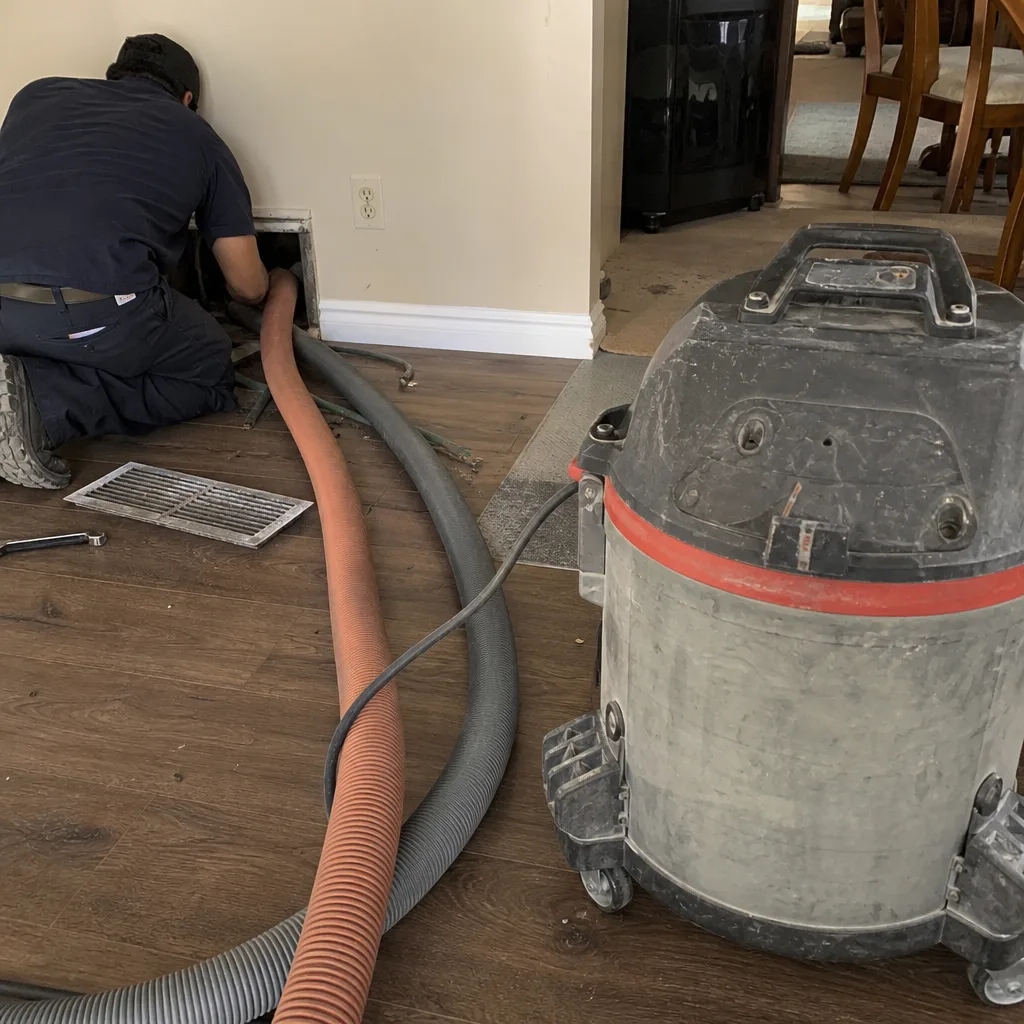 Before
 After
 Before
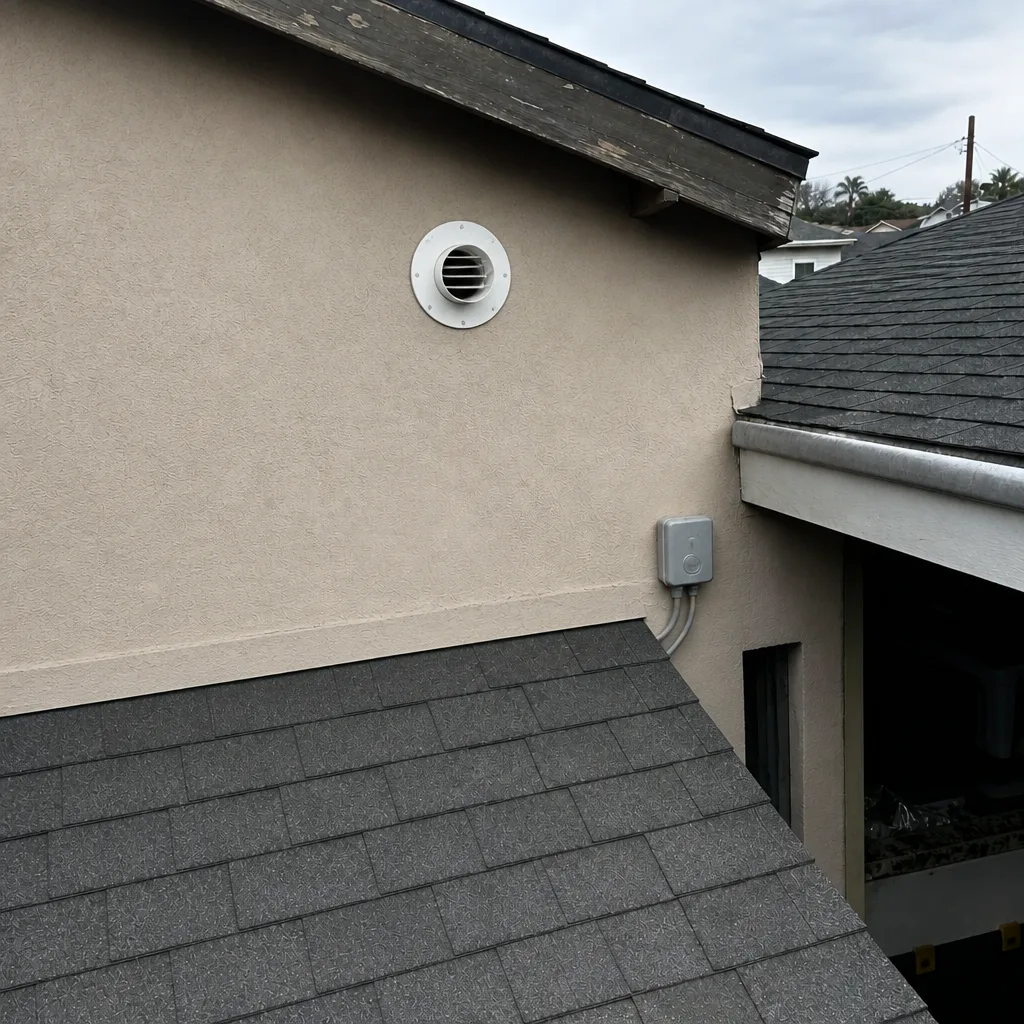 After
When to Call a Professional
Call a Redondo Beach duct professional when you see visible dust accumulation around supply registers within days of a Santa Ana event, when a musty odor persists through marine layer season, when smoke odor lingers more than two weeks after a wildfire event, when the blower wheel or evaporator coil is visibly coated, when dryer cycles run longer than they did a season ago, or when any inspection reveals separated duct joints, crushed flex runs, or damaged liner. These are all conditions where the problem is either inside the duct system or at the air handler, and where the solution requires source-removal equipment and a repair assessment, not a household vacuum and good intentions. Duct Cleaning Redondo Beach offers free estimates in Redondo Beach – call (877) 358-4828. We answer 24/7. Fast dispatch from 7am to 7pm, Sunday through Friday.
Frequently Asked Questions
Every two years as a baseline, adjusted up or down based on real seasonal events. Heavy Santa Ana seasons, wildfire smoke events, pets, allergy-sensitive occupants, and known duct leakage all shorten the interval. A mild year with sealed ducts and good filtration can extend it. The trigger isn’t a calendar date; it’s what the inspection finds.
Yes, but indirectly. The marine layer creates the humidity condition; it doesn’t directly deposit mold. When humid air enters leaky duct runs in unconditioned spaces and meets cooler duct surfaces, condensation forms. That moisture on duct liner creates the environment where mold can grow. Liner that stays wet through the marine layer season is the specific risk.
Only if you have adequate filtration (MERV 13 or activated carbon) and your duct system is in good condition with no outdoor air intakes pulling smoke-laden air into the return side. If you can’t meet those conditions, seal the system and use standalone HEPA filtration instead. The post-event duct inspection is the non-negotiable step either way.
The difference is what happens to the dislodged particulate. Shop-vac methods agitate debris and rely on system airflow to carry it out, which means a portion exits into the living space. Professional source removal uses a rotary brush to physically dislodge debris and HEPA vacuum equipment to capture it at the point of agitation. On-site air filtration contains anything that escapes containment. The outcome is different because the capture method is different.
It does when the evaporator coil and blower wheel are part of the scope. A dirty coil reduces heat transfer, which forces longer runtimes and higher bills for the same comfort. A loaded blower wheel moves less air per watt. When the cleaning reaches those components – not just the duct walls – the efficiency improvement is measurable in runtime and electricity usage.
Yes, and that’s the right way to coordinate it. Duct leakage, dryer vent restriction, and HVAC contamination are often interconnected problems – a clogged dryer vent pushes particulate into the laundry room, which the HVAC return picks up, which redistributes it through the duct system. One crew with full scope handles all three without vendor hand-offs or scheduling conflicts. Call (877) 358-4828 to schedule a free estimate.
The Bottom Line
Redondo Beach doesn’t have four seasons in the textbook sense, but it has three real HVAC contamination events: marine layer humidity, Santa Ana particulate, and wildfire smoke. Each one deposits a different contaminant type, and each one warrants a different response. The marine layer demands humidity and liner inspection. Santa Ana events demand post-event particulate assessment. Smoke demands filtration management during the event and a full inspection after. Build your cleaning cycle around those triggers, not a generic annual calendar. Use a two-year professional source-removal cleaning as your baseline, adjust for real events, and always pair cleaning with repair assessment – because clean ducts attached to leaking returns don’t stay clean. Call (877) 358-4828 for a free estimate. We answer 24/7. Fast dispatch from 7am to 7pm, Sunday through Friday.
Written by the team at Duct Cleaning Redondo Beach, serving Redondo Beach since 2017.