
Last updated November 4, 2026
 Whole-home duct cleaning
 Dryer vent cleaning
 Camera inspection
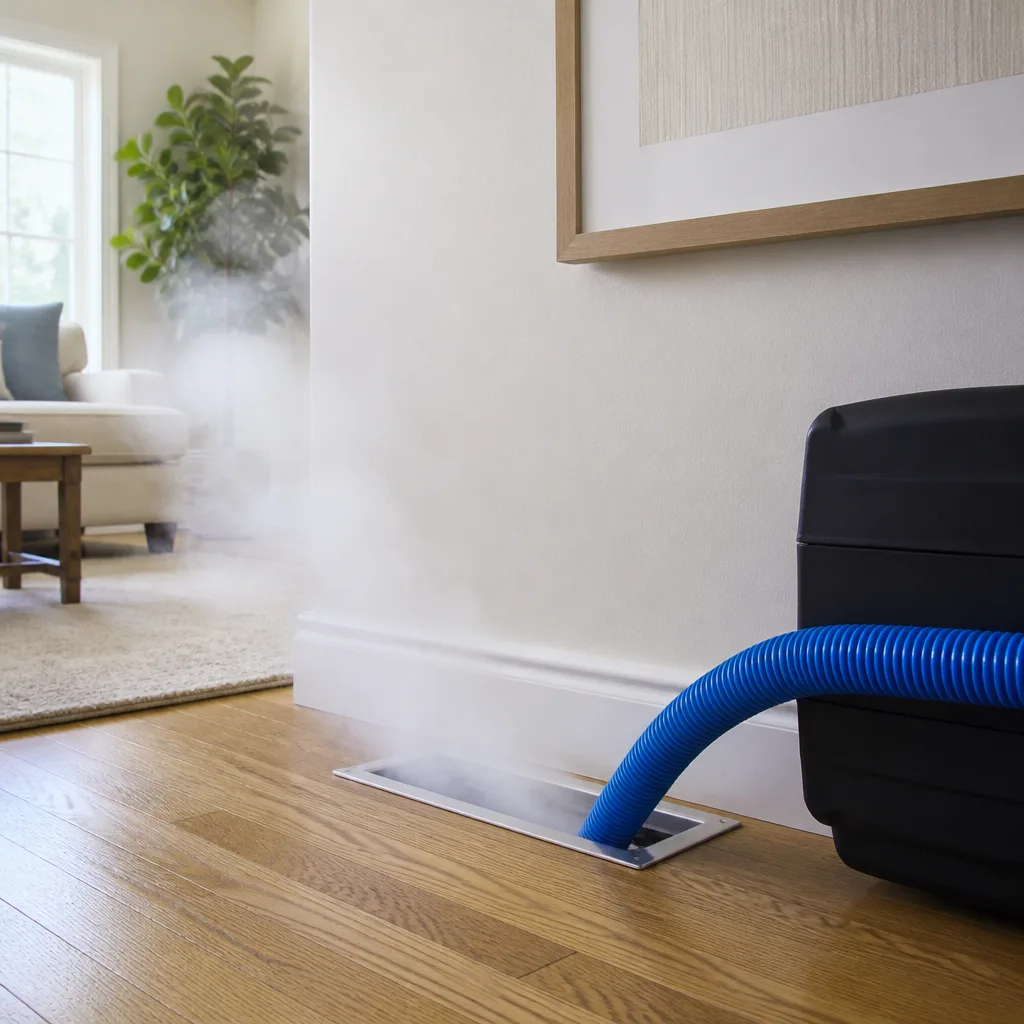 Sanitizing & deodorizing
Whole-system duct and dryer vent check with before-and-after photos - you see exactly what came out of your vents
That "$99 whole-house special" is a bait ad - the real number appears once they are in your hallway, or the "clean" is a shop-vac at the register. We photograph the inside of your ducts before and after instead.
The Complete Guide to Air Duct Cleaning in Redondo Beach
Most air duct cleaning guides read like they were written for a house in Ohio. Throw them at a Redondo Beach home and they miss the point entirely. A house two miles from the King Harbor marina deals with marine layer humidity, salt particulates carried on the prevailing breeze, and a housing stock dominated by post-1970s slab construction with flex duct runs. Those conditions change how ducts get dirty, what grows inside them, and which cleaning method actually works. This guide explains what coastal duct contamination looks like, how a source-removal clean differs from a vent wipe, what NADCA ACR standards actually require, and when duct repair belongs in the same visit as the cleaning. If you live in Redondo Beach and suspect your ducts have not been touched in years, this is the reference to read before you book anything.
Quick Answer
Air duct cleaning in Redondo Beach removes accumulated dust, salt-laden particulates, and biofilm from supply and return ductwork using source-removal equipment such as Rotobrush rotary-brush systems and Nikro HEPA vacuums, not contact-only shop vacs. A proper full-system clean includes the supply runs, return runs, air handler, and plenum, and typically makes sense when ducts show visible debris, musty odor, or heavy dust buildup tied to marine layer humidity. The work is priced per job by written estimate, and Duct Cleaning Redondo Beach provides free estimates for homes throughout Redondo Beach.
Styles & brands we work with
- Whole-home duct cleaning
- Dryer vent cleaning
- Camera inspection
- Sanitizing & deodorizing
Table of Contents
- Why Coastal Air Changes How Ducts Get Dirty
- Flex Duct vs. Rigid Sheet Metal: What Redondo Beach Homes Actually Have
- What Source Removal Actually Means: Rotobrush and Nikro Explained
- Full-System Clean vs. a Vent Wipe: How to Tell the Difference
- What NADCA ACR Standards Really Require (and What Discount Quotes Leave Out)
- Why Duct Repair Belongs in the Same Conversation as Cleaning
- Dryer Vent Cleaning: The Other Duct in the House
- What to Expect During a Professional Duct Cleaning
Why Coastal Air Changes How Ducts Get Dirty
The marine layer that sits over Redondo Beach on summer mornings is not just fog. It is a moving mass of moisture and airborne particulates, including salt compounds from the Pacific surface, that drifts through windows, crawl spaces, and return vents. When that air cycles through an HVAC system, the salt and moisture do not simply pass through. They settle. Salt particulates are abrasive and slightly hygroscopic, meaning they attract and hold moisture. Inside a duct system, that creates a sticky surface where dust, pollen, and other debris bond to the duct walls instead of blowing through. A duct in an inland community accumulates dust that can be blown out with a strong enough vacuum. A duct in Redondo Beach accumulates dust embedded in a salt-and-humidity film that resists contact-only cleaning methods.
Occupants often notice the effect before they understand the cause. White dust reappearing on furniture days after cleaning, a musty smell that comes from the vents only when the AC runs, allergy symptoms that spike overnight. These are not generic dirty-duct signs. They are coastal dirty-duct signs. The moisture component also supports biological growth. Dust mites thrive in humidity above roughly 55 percent, and the marine layer routinely pushes indoor humidity in Redondo Beach homes into that range, especially in systems with dirty coils or unsealed return chases drawing unconditioned air. Biofilm, a thin organic layer that forms on moist surfaces, can develop inside duct runs that never fully dry between cooling cycles. Once biofilm is present, the duct is no longer just dusty. It is hosting a living contaminant layer that a quick contact vacuum cannot remove.
That is the first thing to understand about air duct cleaning in Redondo Beach specifically: the job is not just about removing visible dust. It is about removing the bonded, moisture-reactive accumulation that coastal air leaves behind. A method that works on loose, dry dust in Phoenix will underperform here. The method has to physically dislodge the debris from the duct surface, and the equipment has to capture it before it re-enters the living space. That distinction, source removal versus agitation, is the dividing line between professional duct cleaning and what a handyman with a shop vac attempts.
Flex Duct vs. Rigid Sheet Metal: What Redondo Beach Homes Actually Have
Much of the Redondo Beach housing stock built after 1970 runs on a slab foundation, with ductwork routed through the attic or through chases dropped into soffits. Those systems are overwhelmingly flex duct: a spiral wire frame wrapped in insulation and an inner plastic liner. Flex duct is common across Southern California, but it has specific weaknesses that matter in a coastal climate. The inner liner is not a smooth metal surface. It has a slightly textured, spiral-ribbed profile. Debris, especially the sticky salt-and-moisture combination described above, catches in those ribs. Once a layer forms, airflow friction increases. The system has to work harder to push the same volume of air, and the dust layer becomes a moisture reservoir every time the marine layer rolls in.
Rigid sheet metal ductwork, found in some older Redondo Beach homes and in commercial systems, handles the coastal environment differently. Its smooth surface is easier to clean thoroughly, but it is not immune to contamination at seams and joints where conditioned air leaks pull attic air into the system. Both duct types need source-removal cleaning, but flex duct requires more care. A brush that is too aggressive can tear the inner liner. That is exactly why equipment selection matters. A rotary-brush system sized for the duct diameter, run at controlled torque, agitates the liner surface without damaging it. Shoving a stiff bristle brush designed for sheet metal into flex duct is how liners get shredded, and a torn liner in a Redondo Beach attic means unconditioned, humid attic air leaking into the supply stream.
Original flex duct runs from the 1970s and 1980s are also reaching the end of their service life. The outer insulation degrades, the inner liner becomes brittle, and the result is restricted airflow and contamination pathways that no cleaning can reverse. A thorough air duct cleaning in Redondo Beach should include an honest assessment of the duct condition itself. If a run is collapsed or torn, cleaning it is wasted effort. That run needs repair or replacement first. This is why the full-scope model, cleaning and repair handled by one crew, produces better outcomes than a cleaning-only contractor who will not mention what they saw in the attic.
What Source Removal Actually Means: Rotobrush and Nikro Explained
Source removal is the industry term for physically removing debris from the duct surface, as opposed to blowing it around or knocking it loose and hoping it exhausts somewhere harmless. The tool combination that makes source removal real is a rotary-brush system paired with a high-capture vacuum. We run Rotobrush rotary-brush systems alongside Nikro HEPA vacuum equipment on duct cleaning jobs throughout Redondo Beach. This is the same category of equipment that commercial HVAC contractors use on office buildings and medical facilities, scaled for residential systems.
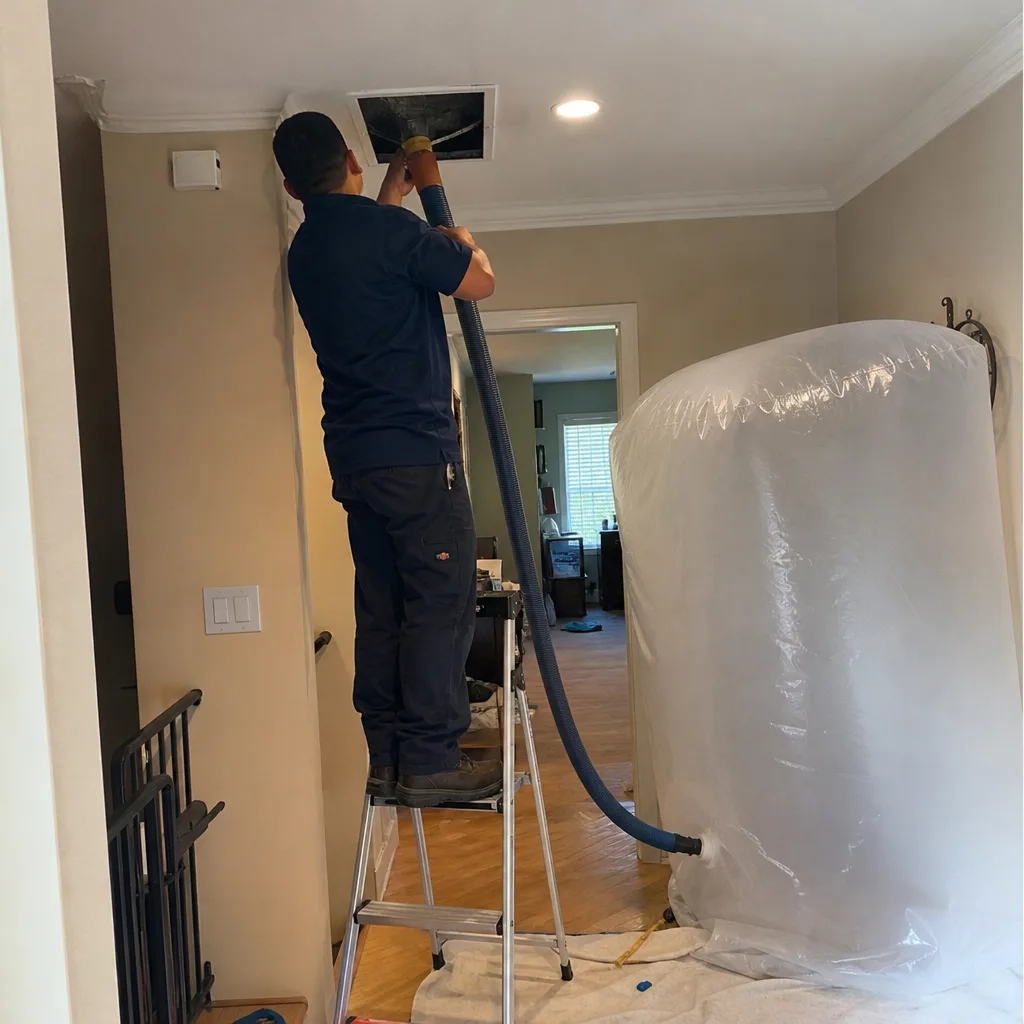
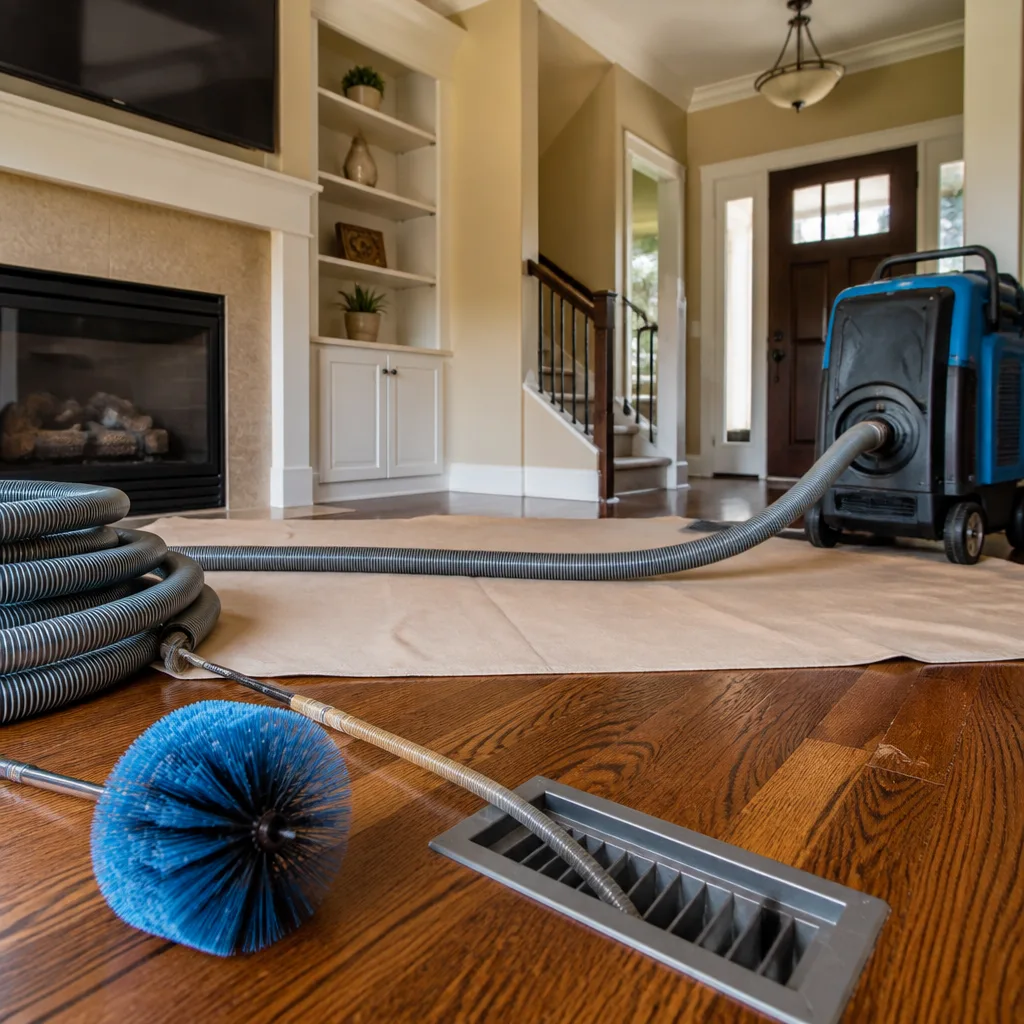
The Rotobrush system works by inserting a rotating brush head into the duct run. The brush spins against the duct walls, physically dislodging debris, salt film, and biofilm that has bonded to the surface. Air movement alone cannot do this. A vacuum alone cannot do this. The mechanical agitation is the difference between scraping a pan and just wiping it. The Nikro HEPA vacuum, connected at the other end of the cleaning path, pulls the dislodged material out of the duct under negative pressure. The HEPA filtration captures fine particulate before it can exhaust back into the building envelope. In a Redondo Beach home, where the stuff coming out of the ducts includes salt compounds, dust mites, pollen, and sometimes mold spores, that capture step matters. You do not want a cleaning method that dislodges contaminants and then recirculates them through the living room.
On every job, we deploy Abatement Technologies air filtration on-site during the cleaning process. The air scrubber runs in the work area while ducts are being agitated, pulling airborne particles out of the occupied space. This containment step is standard practice in professional remediation work, but most residential duct cleaners skip it. The homeowner gets the debris out of the ducts and into their indoor air instead. The filtration step is not an upsell. It is part of doing the job correctly in occupied homes, particularly in Redondo Beach where the marine layer already keeps windows closed during part of the day and indoor air has fewer opportunities to dilute.
Full-System Clean vs. a Vent Wipe: How to Tell the Difference
Not everything advertised as duct cleaning is duct cleaning. The discount mailer price in Redondo Beach frequently buys what the industry calls a vent wipe: a technician removes the register covers, wipes the visible portion of the vent opening, vacuums what they can reach from the room side, and calls it done. The duct runs themselves, the parts that extend through the attic or behind walls, are never touched. The air handler is never opened. The return chase is ignored. The customer pays less, sees cleaner-looking vent openings for a week or two, and the source of the problem continues recirculating dust through the home.
A full-system clean addresses the entire air path. Here is what that involves:
- Supply runs: Every branch duct that delivers conditioned air from the air handler to each room. These are cleaned with the rotary-brush and HEPA vacuum, room by room, from the register opening back to the plenum connection.
- Return runs: The ducts that pull air back to the system. In Redondo Beach slab homes, return chases are often undersized and share wall cavities with construction debris. These runs need the same source-removal treatment as the supply side.
- Air handler: The blower compartment, coil, and drain pan. A dirty coil defeats the purpose of clean ducts. Our full-system clean includes the air handler interior because debris that bypasses the filter accumulates here and supports biological growth in the humid marine air.
- Plenum: The sheet metal boxes at the supply and return ends of the air handler where branch ducts connect. Plenums collect what the filter misses and act as distribution hubs. When contamination is present in the plenum, every branch run gets re-contaminated from a central source.
- Register covers and grilles: Removed, cleaned, and reinstalled. This is the visible finishing step, not the entire job.
If a quote does not specify which of these components are included, ask. A legitimate contractor can tell you in plain language what gets cleaned. A discount operator will deflect with vague language about “complete system cleaning” without ever explaining what that means. The difference between a $99 mailer special and a professional full-system clean is not the margin on the same work. It is the scope of work entirely. One touches the visible vents. The other cleans the duct system. They share a category name and nothing else.
What NADCA ACR Standards Really Require (and What Discount Quotes Leave Out)
NADCA, the National Air Duct Cleaners Association, publishes the ACR standard, formally titled Assessment, Cleaning, and Restoration of HVAC Systems. It is the reference standard for professional duct cleaning in North America, and it establishes specific requirements for what a proper cleaning involves. When a discount operator says they “follow industry standards” without naming the standard, they usually mean they do not.
The ACR standard requires source-removal cleaning. Not fogging. Not air-freshening. Not spraying a deodorizer into the return and collecting a check. Source removal means mechanical agitation that dislodges debris from the duct surface, combined with negative-pressure collection that removes it from the system. The standard also requires cleaning the entire air handling system, including coils, blower, drain pan, and the plenum connections, when those components are visually contaminated. It requires access openings to be created and properly sealed after cleaning when the duct configuration prevents cleaning from existing openings. And it requires the work to be performed in a manner that protects the occupied space from re-contamination during the process.
In practice, this shapes the Redondo Beach market in specific ways. A contractor using Nikro HEPA vacuum equipment and Rotobrush rotary-brush systems is working within the ACR framework because the equipment matches what the standard requires. A contractor with a shop vac and a brush on a drill is not. The standard does not name brands, but it names capabilities: mechanical agitation, HEPA-level capture, whole-system access. When you hear that a Redondo Beach duct cleaning quote covers “the whole system” for less than a few hundred dollars, ask which components are included and what equipment is used. The ACR standard gives you the vocabulary to distinguish a real clean from a vent wipe with extra steps.
Why Duct Repair Belongs in the Same Conversation as Cleaning
Cleaning a damaged duct is like detailing a car with a blown head gasket. The surface gets clean, but the system still does not work right. In Redondo Beach homes, the damage patterns are predictable. Flex duct runs in attics get compressed under stored boxes or new insulation, restricting airflow at a kink that vacuum and brush cannot reverse. Return chases built in the 1970s and 1980s leak at framing connections, pulling unconditioned attic air into the return stream. Supply boots detach at the register, dumping conditioned air into the attic instead of the bedroom. None of these problems are fixed by cleaning. All of them are found during it.
Our model treats air duct repair as part of the same service scope, handled by the same crew that does the air duct cleaning. When the Rotobrush head reaches a collapsed section that will not pass, or the negative-pressure test shows a leak that keeps pulling attic air into the return, the answer is not to clean around it and write up an invoice. The answer is to flag it, show the homeowner what is happening, quote the repair, and do the repair. Cleaning-only competitors leave that conversation untouched because they are not equipped to do the work. The homeowner pays for a clean and then still has high utility bills, uneven temperatures, and a duct system pulling humid marine-layer air from the attic. The repair is not an upsell. It is the actual problem.
This matters more in Redondo Beach than in the inland communities that most duct-cleaning guides assume. The marine layer pushes attic humidity up on a regular schedule. A leaky return in a Redondo Beach attic is not just a comfort problem. It is a moisture delivery system feeding the dust and biofilm problem described earlier. Sealing the return chase, reconnecting the separated boot, or replacing the crushed flex run changes what the system brings into the house. Cleaning removes what is already there. The two belong together.
Dryer Vent Cleaning: The Other Duct in the House
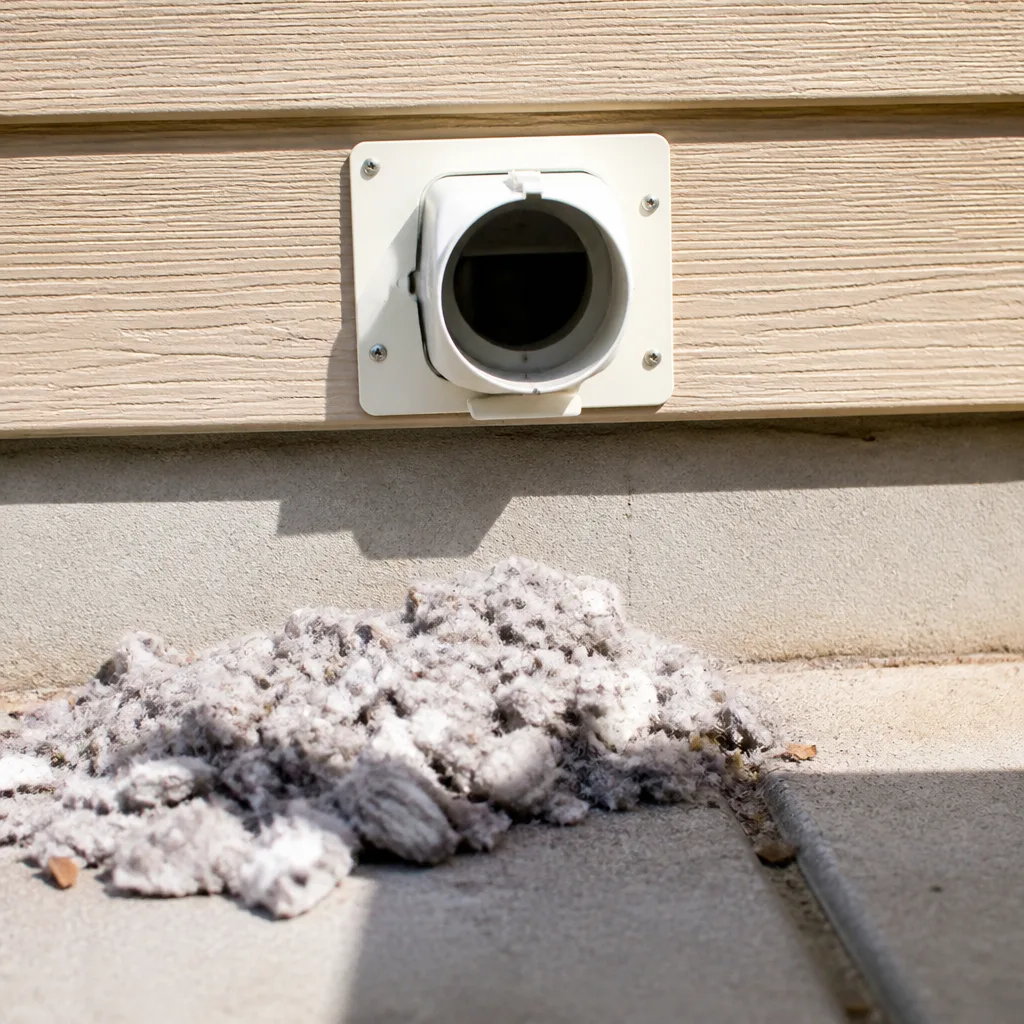
The clothes dryer vent is technically a duct, and in Redondo Beach homes it is usually the most dangerous one. Dryer vents collect lint, and lint burns. The US Fire Administration has long identified dryer vent fires as a leading cause of residential fires, and the risk rises when the vent run is long, has multiple elbows, or runs through an attic or wall cavity. Redondo Beach slab homes frequently have laundry rooms located in the middle of the house, with vent runs that travel ten, fifteen, or twenty feet before reaching an exterior wall. Every foot of that run collects lint that the dryer filter misses, and every elbow in the run is a collection point.
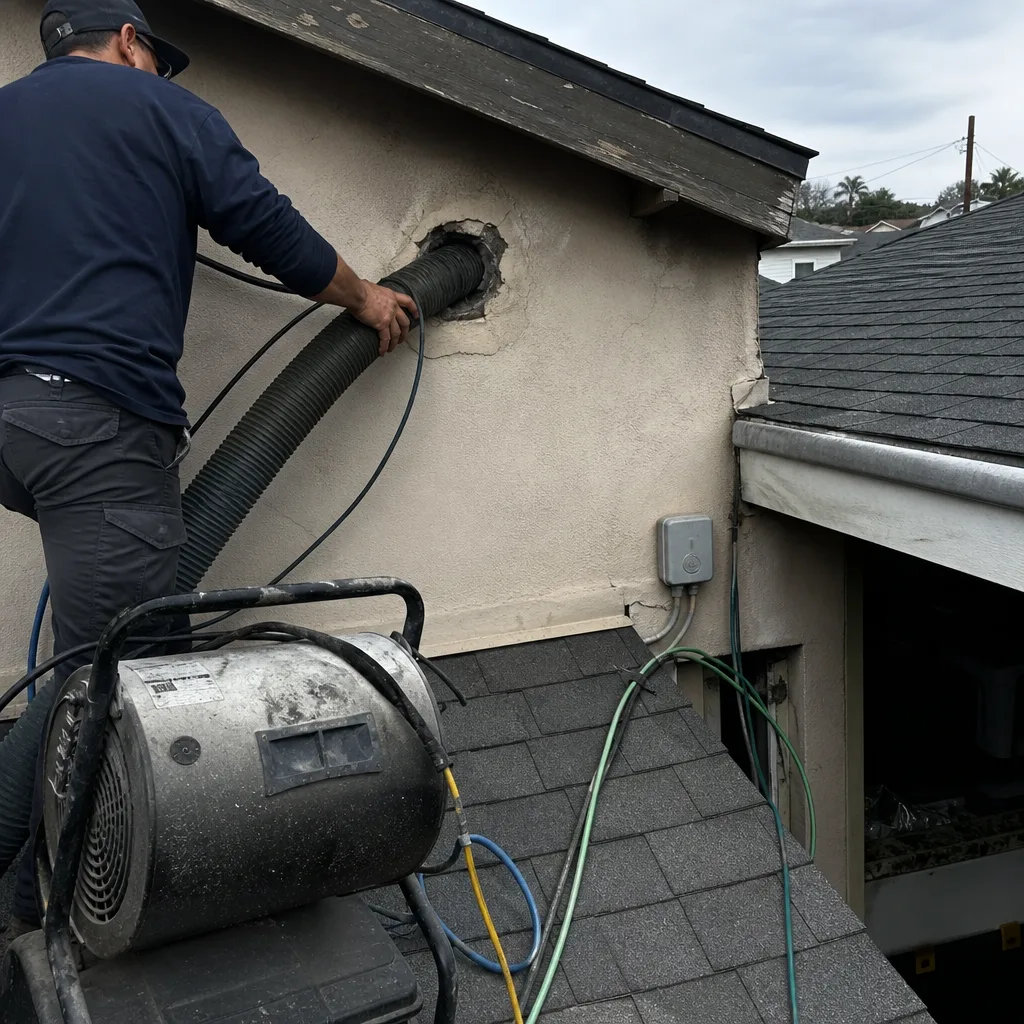
Regular dryer vent cleaning removes the accumulated lint, but it also addresses what the lint indicates. If the vent is clogging rapidly, the run is too long, or the duct itself is damaged, cleaning buys time without solving the underlying problem. Since duct repair is within our scope, a dryer vent clean often includes an assessment of the vent configuration itself. A run with too many elbows should be reworked. A run with separated seams inside a wall cavity is a fire hazard waiting for an ignition source. We handle the cleaning and the repair under one scope, which means the homeowner is not asked to coordinate a vent cleaner and a separate HVAC contractor for what is really one connected problem.
What to Expect During a Professional Duct Cleaning
If you have never hired a professional duct cleaner before, the process can feel intrusive. Knowing what should happen helps you evaluate the contractor you have chosen. Here is the sequence of a proper full-system source-removal clean on a Redondo Beach home:
- Walkthrough and system assessment: The technician walks the home and the attic or crawl space, identifies the system layout, locates the supply and return runs, and checks the filter condition and coil access. This is where general system problems get flagged, because you cannot plan the clean without knowing what you are cleaning.
- Area protection and on-site filtration setup: Drop cloths go down at the work areas, and Abatement Technologies air filtration is deployed in the occupied space to capture anything that becomes airborne during agitation.
- Access points are cut and sealed: For duct runs that cannot be cleaned from an existing register opening, small access ports are cut into the duct and later sealed with caps and mastic. This is NADCA-compliant practice, not a shortcut.
- Source-removal cleaning of supply and return runs: Each run is brushed with the Rotobrush system while the Nikro HEPA vacuum maintains negative pressure on the run. Debris, salt film, and biofilm are dislodged mechanically and removed through the vacuum, not blown into the home.
- Air handler, coil, and plenum cleaning: The blower, evaporator coil, drain pan, and both plenums are cleaned with the same source-removal standard. This step is what separates a full-system clean from a vent wipe.
- Register and grille cleaning: Covers are removed, cleaned, and reinstalled. This is the visible part of the job, and it is usually the least consequential.
- Final walkthrough and system test: The system is run through a full cycle, airflow is checked at the registers, and the homeowner is shown what came out of the ducts. You should always ask to see the debris or at least the filter from the collection equipment. It is the proof that the work was not theater.
The entire process on a typical Redondo Beach single-family home takes half a day to a full day depending on the number of runs, the system size, and whether repairs are folded into the visit. If a company quotes you 45 minutes for a whole-house duct cleaning, you are not getting the service described above.
Common Mistakes to Avoid
- Assuming the marine layer is the problem rather than what it deposits into your ducts. Humidity itself is invisible. What it produces, salt-bonded dust layers and biofilm inside the air delivery system, is the thing worth treating. Cleaning the air without cleaning the ducts is treating the symptom.
- Hiring on price alone from a mailer. A Redondo Beach home with flex duct in the attic and a marine layer outside needs a specific kind of cleaning. The cheapest quote is usually a vent wipe, not a source-removal clean. The two services share a name but not a scope.
- Believing the manufacturer’s filter recommendation is enough for a coastal home. A standard 1-inch fiberglass filter protects the equipment, not the occupant. In Redondo Beach humidity, pairing a better-media filter with clean ducts is what actually moves the needle on indoor air quality. Talk to the technician about what goes downstream of the Duct Cleaning Redondo Beach service.
- Cleaning ducts without checking the return side for leaks. A leaky return in an unconditioned attic pulls humid, dusty attic air into the system regardless of how clean the supply runs are. Clean ducts connected to a leaky return recontaminate within weeks.
- Ignoring the dryer vent while paying attention to the HVAC ducts. The HVAC duct problem causes discomfort. The dryer vent problem causes fires. In homes with long vent runs through slabs and attics, the dryer vent is the more urgent duct issue.
- Treating cleaning as a one-time event when the environment is ongoing. Redondo Beach does not stop generating salt particulates and marine layer humidity because you cleaned the ducts. A home near the coast will re-accumulate faster than an inland property. The cleaning interval is shorter here, and expecting otherwise leads to disappointment.
- Using a contractor who cannot repair what the cleaning reveals. A crushed flex run, a torn liner, or a separated boot will not be fixed by more brushing. If the cleaning crew cannot do the repair, you are paying twice: once for the clean and again for the fix that should have been part of the same visit.
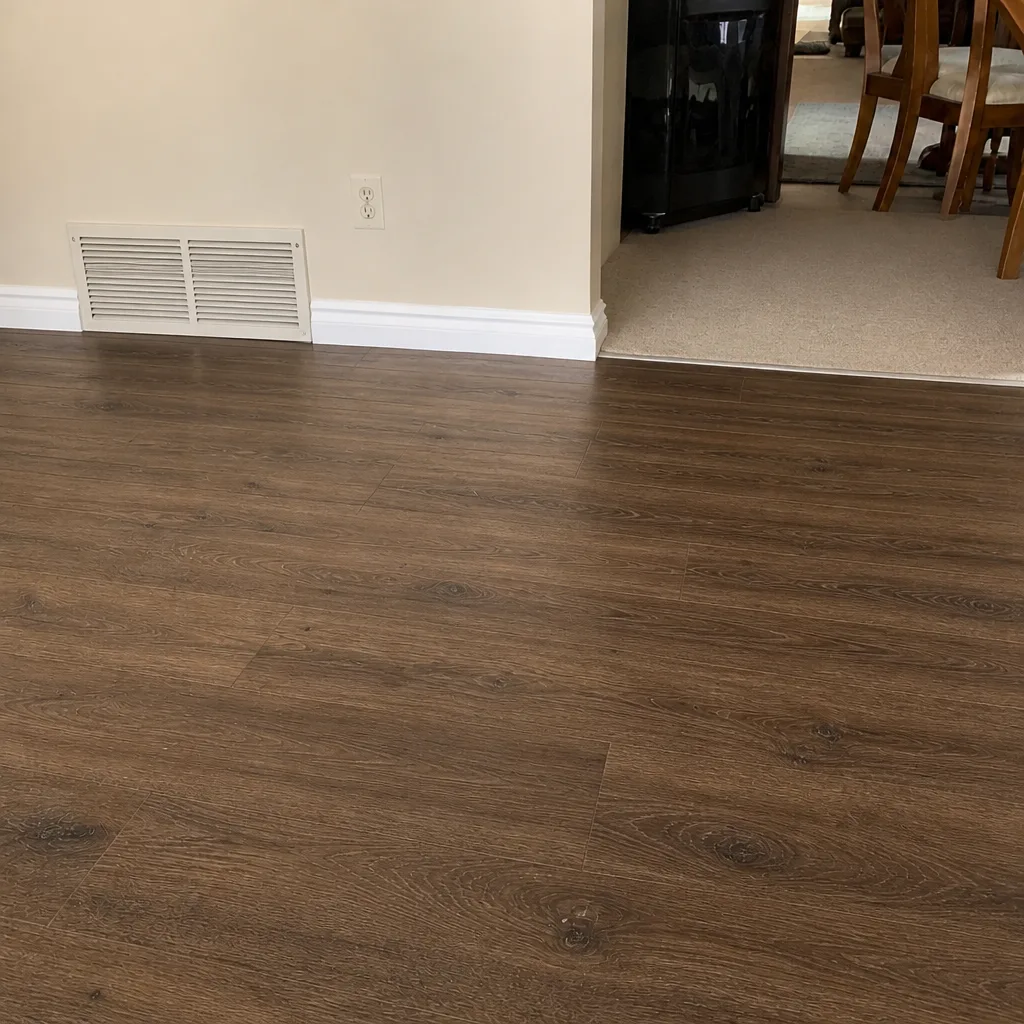
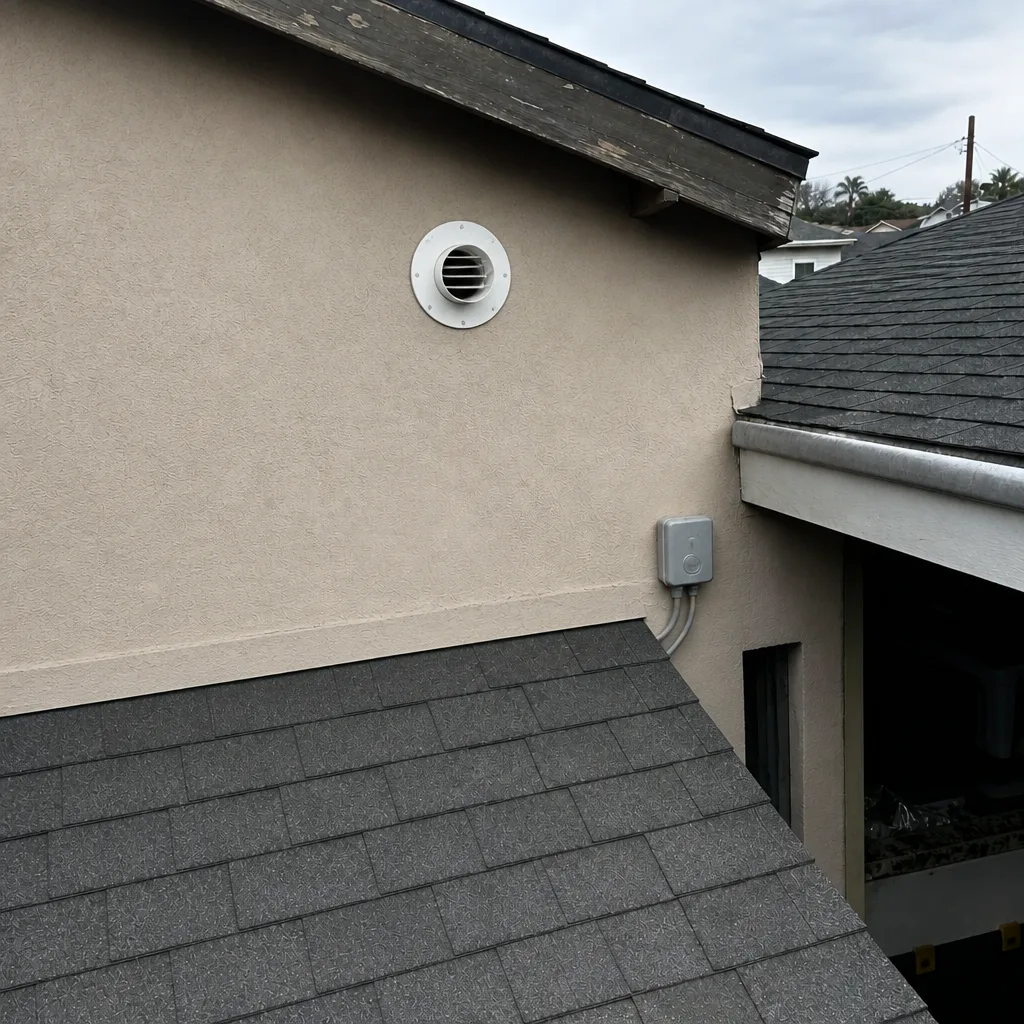
See the difference
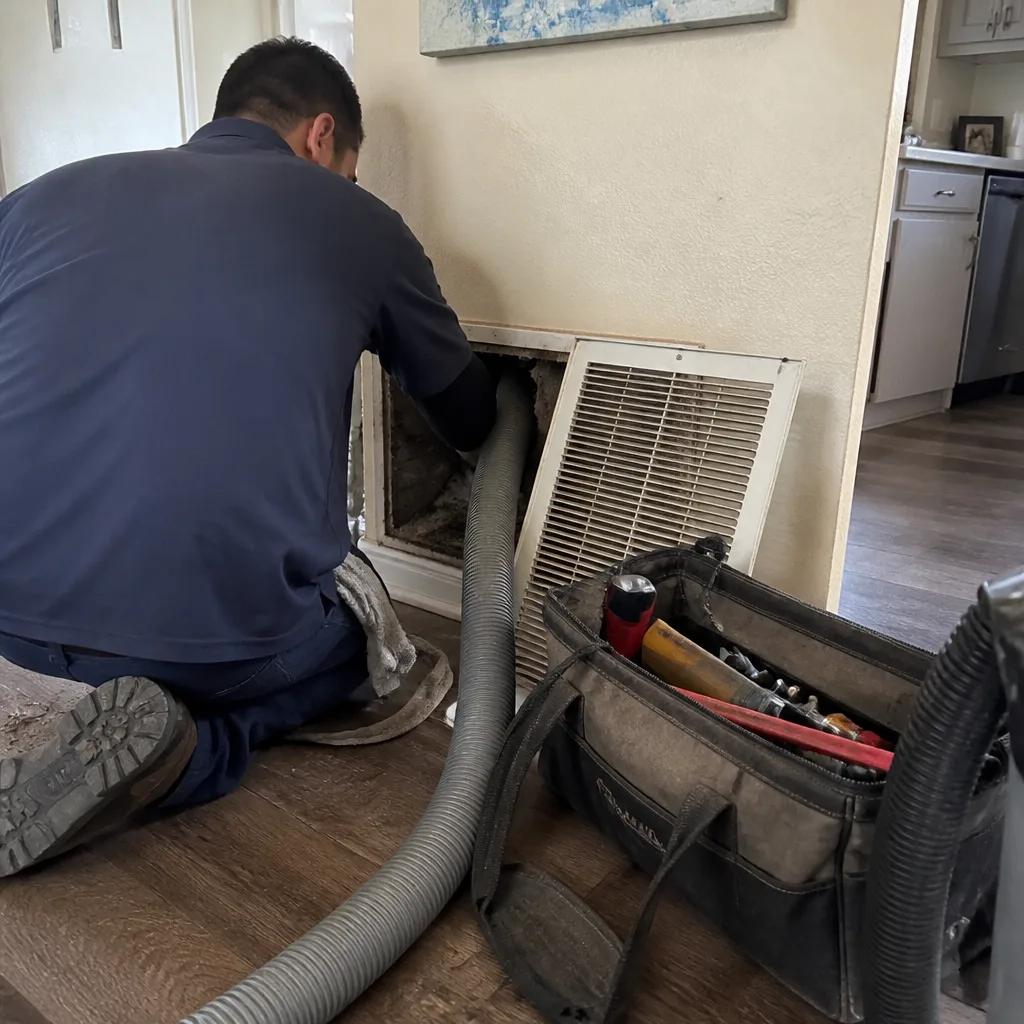 Before
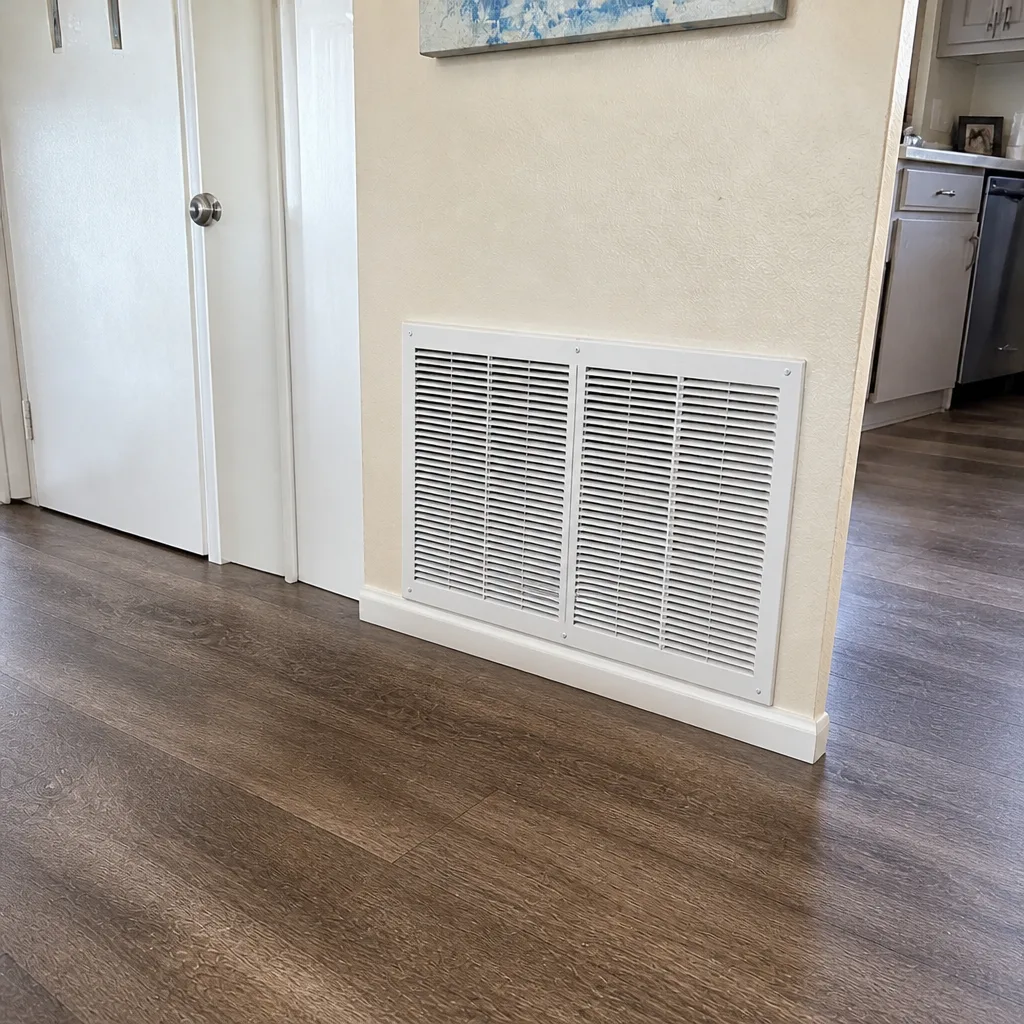 After
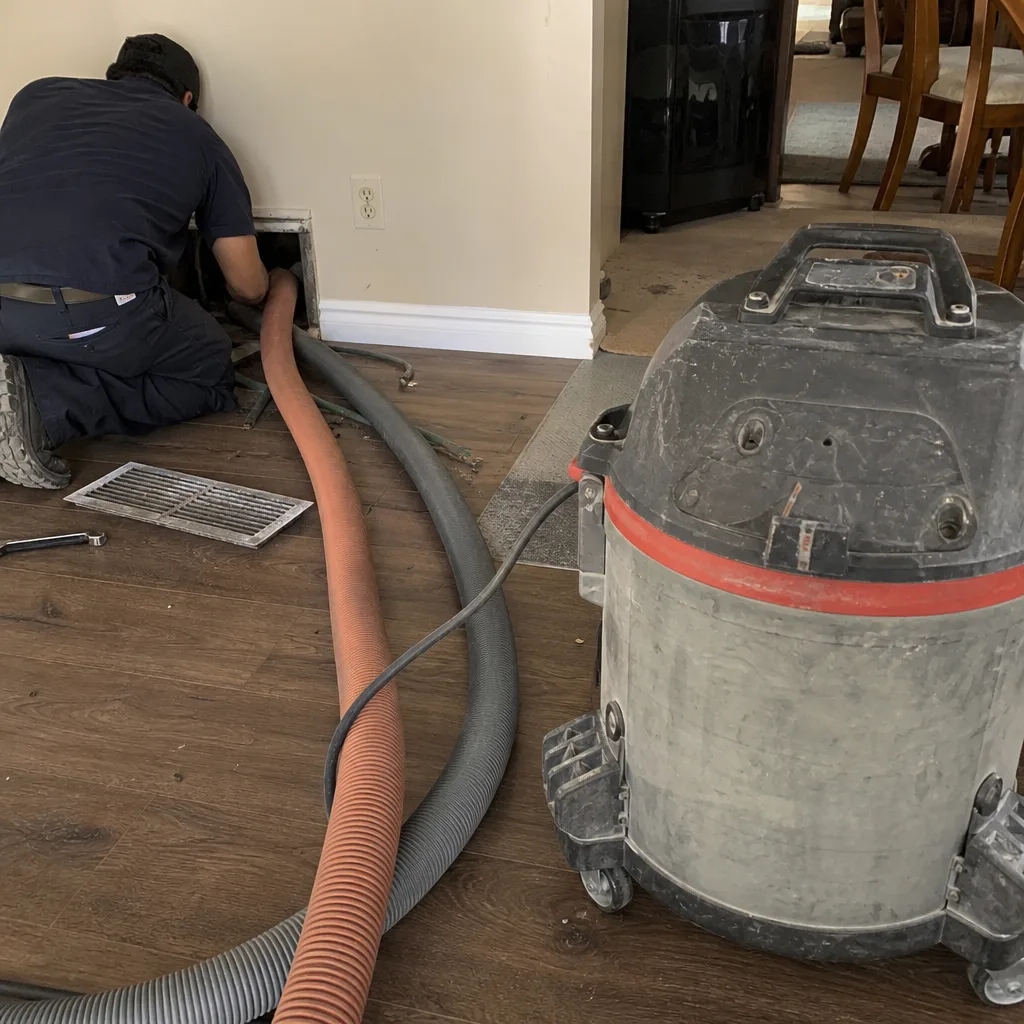 Before
 After
 Before
 After
When to Call a Professional
Visible dust puffing from the registers when the system starts, a musty smell that only appears with the AC, rooms that never reach temperature, allergy symptoms that spike indoors and ease outdoors, dryer loads that take multiple cycles to dry. Any one of these is reason enough to have the system assessed. In Redondo Beach, the marine layer means these symptoms are more likely to indicate actual duct contamination rather than just dirty surroundings. If you are seeing the signs, do not wait for the problem to become obvious enough to film. Duct issues compound: the biofilm that supports mold growth does not self-clean, and the salt film that bonds dust to duct walls does not blow away. Duct Cleaning Redondo Beach offers free estimates in Redondo Beach. Call (877) 358-4828. We answer 24/7. Fast dispatch from 7am to 7pm, Sunday through Friday.
Frequently Asked Questions
Air duct cleaning in Redondo Beach is priced per job by written estimate, because the scope varies with system size, duct configuration, and contamination level. A ranch home with six supply runs and clean returns costs less than a two-story with original flex duct, a dirty coil, and repairs needed. The written estimate sets the final price before work begins. Call (877) 358-4828 for an exact quote. We answer 24/7. Fast dispatch from 7am to 7pm, Sunday through Friday.
The cheap quotes are usually for a vent wipe, not a full-system source-removal clean. When a Redondo Beach contractor quotes a whole-house clean for less than the cost of the equipment time alone, the scope has been reduced somewhere, usually at the air handler, the return side, or the actual duct runs. Watching what is actually included before you book avoids paying twice for the same job.
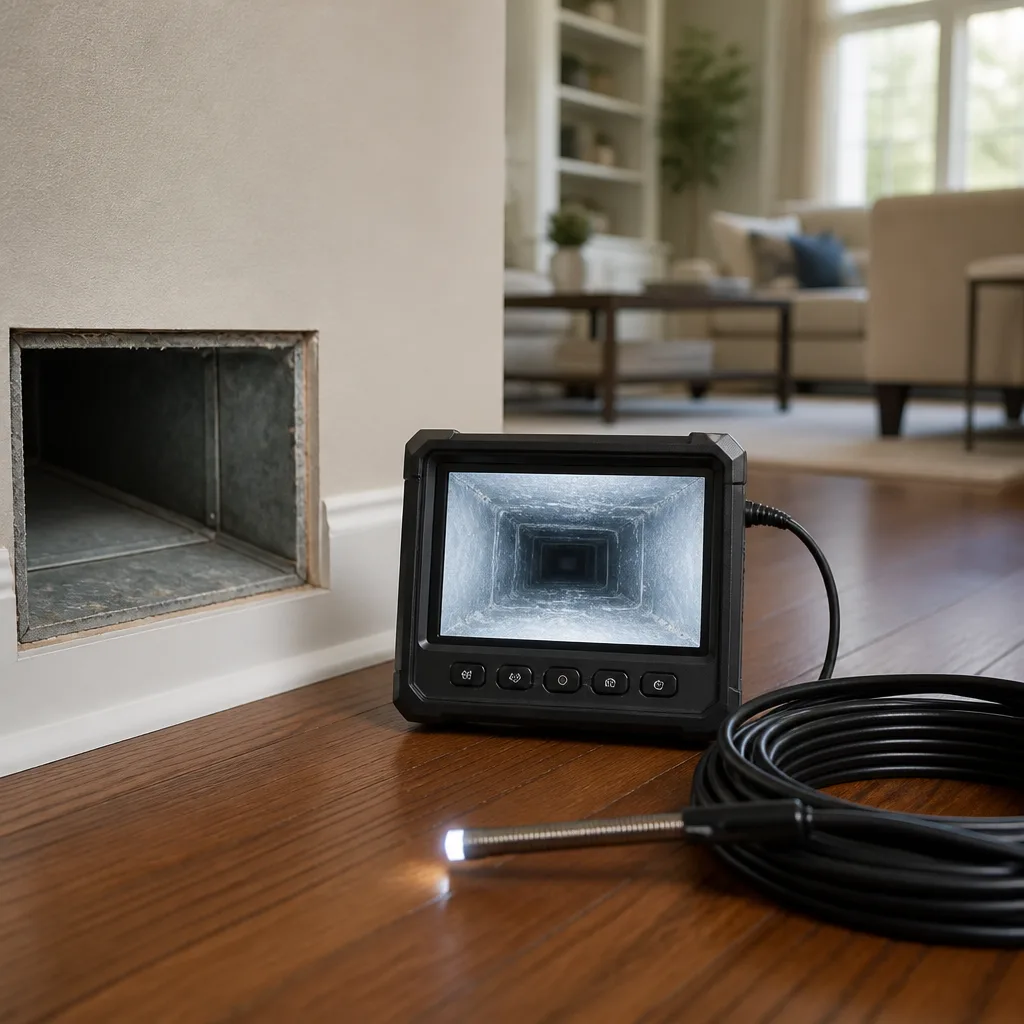
Ask to see the collection filter after the job and ask which components were cleaned: supply runs, return runs, air handler, coil, and plenum. A legitimate source-removal clean leaves debris in the vacuum filter that the technician can show you. Before-and-after photos of the duct interior through an access port are another verification. If the crew cannot show evidence beyond the visible register covers, the work was probably not done beyond the register covers.
There is no fixed interval that applies to every home, but coastal conditions in Redondo Beach shorten the cycle compared to inland properties. Salt particulates bond to duct surfaces faster, and marine layer humidity supports biological growth that dry climates do not. A home near the marina with pets and an older flex-duct system might show significant contamination again within three to five years, where a dry inland home could go longer. The honest answer is to inspect rather than guess.
It can, when the ducts are the source of the allergens. Dust mites, pollen, and mold spores accumulate in dirty ductwork and recirculate every time the system runs. Removing that material at the source, and capturing it with HEPA filtration rather than blowing it into the rooms, removes a reservoir that keeps re-exposing occupants. If the allergy triggers are coming from somewhere else, duct cleaning will not fix them. But in a home where the AC kicks on and sneezing starts, the ducts are usually part of the answer.
Do you handle Redondo Beach homes only, or the surrounding area too?
Duct Cleaning Redondo Beach works throughout Redondo Beach and the surrounding communities. The scope of every job includes air duct cleaning, dryer vent cleaning, and air duct repair, handled by one crew with the same professional equipment. Call (877) 358-4828 to schedule a free estimate. We answer 24/7. Fast dispatch from 7am to 7pm, Sunday through Friday.
The Bottom Line
Redondo Beach homes need a duct cleaning approach that accounts for what the marine layer deposits into the system. Salt-laden particulates bond to flex duct liners, humidity supports biofilm growth, and original duct runs from the 1970s and 80s are reaching the end of their service life. The answer is source-removal cleaning with rotary-brush agitation and HEPA capture, not a vent wipe with a shop vac, and the work belongs alongside duct repair when the system itself is compromised. Duct Cleaning Redondo Beach brings Rotobrush rotary-brush systems, Nikro HEPA vacuum equipment, and Abatement Technologies air filtration to every job, with dryer vent cleaning and duct repair under the same crew. If your system shows signs of contamination, get the estimate first and ask what the quote actually includes. The questions are free, and the difference between a real clean and a vent wipe is the whole point.
Written by the team at Duct Cleaning Redondo Beach, serving Redondo Beach since 2017.