
Last updated November 4, 2026
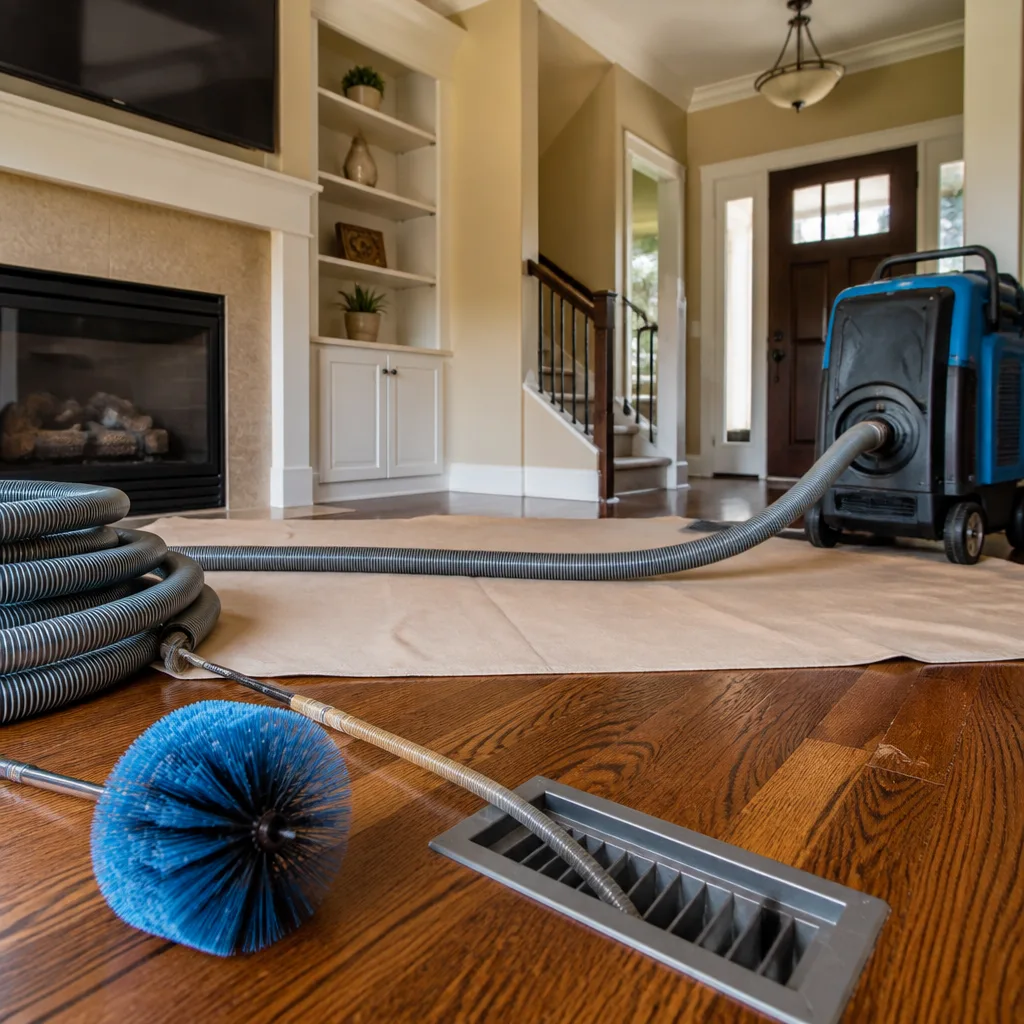 Whole-home duct cleaning
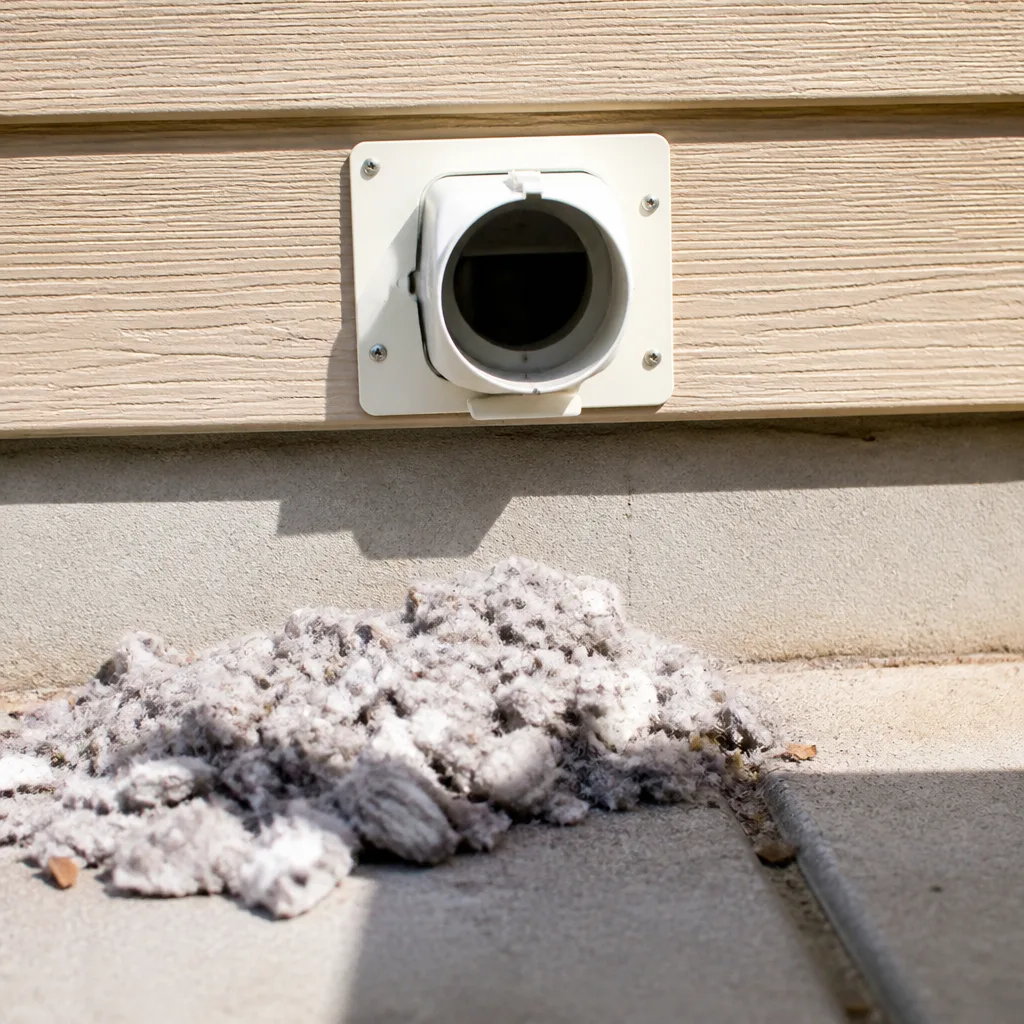 Dryer vent cleaning
 Camera inspection
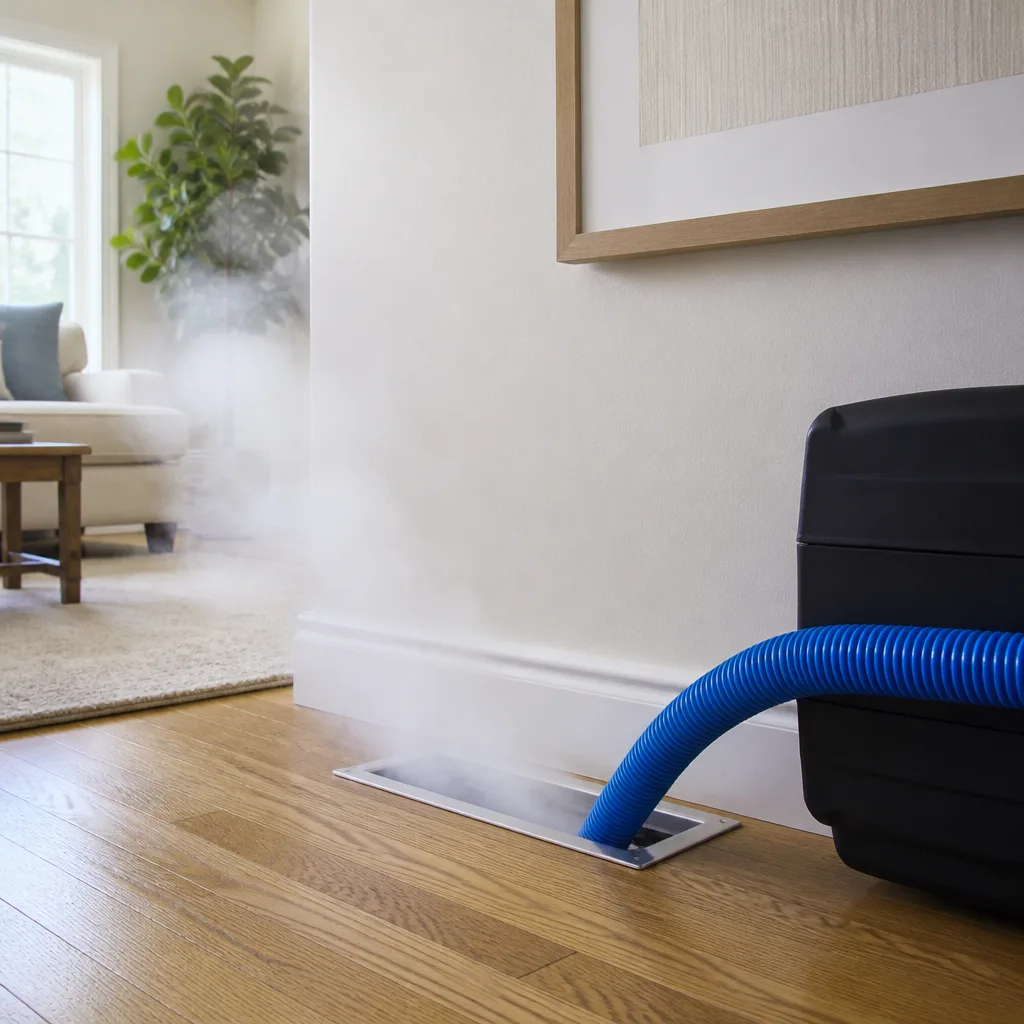 Sanitizing & deodorizing
Whole-system duct and dryer vent check with before-and-after photos - you see exactly what came out of your vents
That "$99 whole-house special" is a bait ad - the real number appears once they are in your hallway, or the "clean" is a shop-vac at the register. We photograph the inside of your ducts before and after instead.
Air Duct Cleaning Troubleshooting in Redondo Beach: Common Problems and How to Fix Them
If every room in your Redondo Beach home feels like a different climate zone, your ducts aren’t just dirty – they’re probably damaged, disconnected, or crushed at a specific elbow or junction that a visual vent inspection will never reveal. Most homeowners chase the wrong fix because they treat the symptom, not the section. This guide maps the most common duct problems in Redondo Beach to the specific mechanical failures that cause them, so you know when cleaning solves it, when repair is required, and what a proper air duct cleaning should actually include.
Quick Answer
Air duct problems in Redondo Beach typically stem from one of three root causes: damaged or disconnected flex duct, breached return-side seams pulling attic air, or microbial growth from persistent humidity. Uneven airflow usually points to a collapsed or disconnected section rather than dirt, while persistent dust points to a return-side leak. The fix depends entirely on which section failed, which is why a camera inspection with source-removal equipment matters more than a blind cleaning.
Styles & brands we work with
- Whole-home duct cleaning
- Dryer vent cleaning
- Camera inspection
- Sanitizing & deodorizing
Table of Contents
- Symptom-to-Cause Matrix: What Each Problem Actually Means
- Uneven Airflow in Redondo Beach Homes: Collapsed and Disconnected Ducts
- Persistent Dust on Vents and Furniture: Return-Side Seam Leaks
- Musty Odor When the HVAC Runs: Microbial Growth in Flex Duct
- The Redondo Beach Humidity Factor: Rust Pinholes in Metal Trunk Lines
- When Cleaning Alone Won’t Fix It: The Repair Threshold
- What You Can Check Yourself Before You Call
- Why a Camera Inspection Beats a Blind Cleaning
Symptom-to-Cause Matrix: What Each Problem Actually Means
The single most useful thing we can tell a Redondo Beach homeowner is this: most duct complaints are not distributed evenly through the system. A room that never cools properly, a smell that only appears when the blower kicks on, dust that accumulates faster on one side of the house – each of these maps to a specific section of ductwork. Treating the entire system when one zone is symptomatic is exactly what discount duct cleaners do. It costs you money and leaves the actual fault untouched.
Here is how the most common Redondo Beach duct complaints break down by root cause:
- Musty odor from specific registers: Microbial growth in flex duct, typically in a section that has accumulated moisture from condensation or a small leak. Cleaning-only fixes often fail because the liner itself is compromised.
- Uneven airflow between rooms: A collapsed, kinked, or disconnected section of flex duct, often found in the attic where the duct drops to a register. Dirt is rarely the primary cause of a room that barely gets air.
- Excessive dust on vents and furniture: A breached return-side seam or duct joint pulling unfiltered attic air into the system. The dust is not coming from inside the ducts; it is bypassing the filter entirely.
- Metallic tapping or popping sounds: Pressure changes in a rust-pinhole-damaged metal trunk line, or a loose joint that flexes as the system cycles. These sounds are structural, not cleanliness issues.
- Reduced airflow at every register: A severely clogged evaporator coil or a crushed main trunk. This is a whole-system symptom, but the cause is usually a single point of failure, not uniform dirt.
Mapping the symptom before you call anyone means you can ask the right questions. It also means you can spot a contractor whose answer to everything is “we’ll clean it” when the actual answer is “we need to find the failed section and repair it.”
Uneven Airflow in Redondo Beach Homes: Collapsed and Disconnected Ducts
When one bedroom in a Redondo Beach home stays warm in summer while the hallway is freezing, the likely cause is not a dirty duct. It is a flex duct that has collapsed, kinked, or pulled loose from its register boot in the attic. Flex duct is the flexible, insulated tubing used to connect rigid trunk lines to individual rooms. It is durable, but it does not tolerate being stepped on, poorly supported, or installed with tight bends.
The failure is almost always local. One section of flex duct gets compressed under attic storage, pinched at a framing penetration, or separated at a connection point. The result is a specific room that receives dramatically less conditioned air than the rest of the house. The rest of the system may be working perfectly well, which is why a whole-system cleaning makes no sense in this scenario.
What we look for during a Duct Cleaning Redondo Beach service call when airflow is the complaint:
- Kinked flex duct: A sharp bend reduces effective diameter and strangles airflow. This is often visible from the attic access if the duct is exposed.
- Compressed duct: Storage boxes, old insulation, or a previous contractor’s footprint can crush the spiral wire inside flex duct until the interior closes down.
- Disconnected boot: The duct pulls away from the metal boot at the register, dumping conditioned air into the attic instead of the room. The room never reaches temperature because it is not receiving the air at all.
- Undersized or poorly routed section: A long, meandering run with excessive bends drops pressure before air ever reaches the register.
The fix is repair, not cleaning. The affected section gets re-supported, re-routed, or replaced. Once the mechanical path is restored, airflow returns. This is exactly why our team handles air duct cleaning and duct repair together – finding the failed section and fixing it is the job, not an upsell.
Persistent Dust on Vents and Furniture: Return-Side Seam Leaks
If you dust on Sunday and by Thursday the furniture has a fresh film, your ductwork is not generating dust. Your return side is leaking. The return side is the half of the duct system that pulls air from your rooms back to the HVAC unit. It runs under negative pressure. Any gap, seam separation, or disconnected joint on the return side acts like a vacuum intake, pulling whatever is in the attic or wall cavity straight into the airstream.
That air bypasses the filter completely. It never touches the media. It goes into the blower, across the coil, and gets pushed out through every supply register in the house. The dust you see on your furniture is attic dust and insulation fibers, and it will keep coming back no matter how many times you wipe it down or replace the filter.
Signs that your Redondo Beach home has a return-side leak include:
- Dust accumulating faster in rooms farthest from the return register
- Visible dust streaks on the wall near return grilles
- A faint whistling or rushing sound when the system runs, coming from an attic or closet space
- Higher than expected utility bills during peak cooling months, because the system is conditioning attic air
The fix is sealing and repair. We locate the breach with a camera inspection, then mechanically secure and seal the joint. Cleaning alone does nothing for a return-side leak, because the contamination is entering downstream of the filter, continuously. A proper dryer vent cleaning mindset applies here too: if the path is breached, you fix the path before you talk about cleaning it.
Musty Odor When the HVAC Runs: Microbial Growth in Flex Duct
A musty smell that only appears when the blower runs, and only from certain registers, almost always points to microbial growth inside flex duct. The flexible inner liner of most flex duct is a textured polymer surface. Under the right conditions – sustained moisture, moderate temperature, and a small amount of organic dust – that liner becomes a breeding ground for mold and mildew.
In Redondo Beach, the moisture source is typically condensation. When humid air moves through a cold duct in an unconditioned attic, water beads form on the interior. If the duct is poorly insulated, or if the insulation has been compressed or torn, condensation worsens. Over time, dust settles into that moisture, and growth follows.
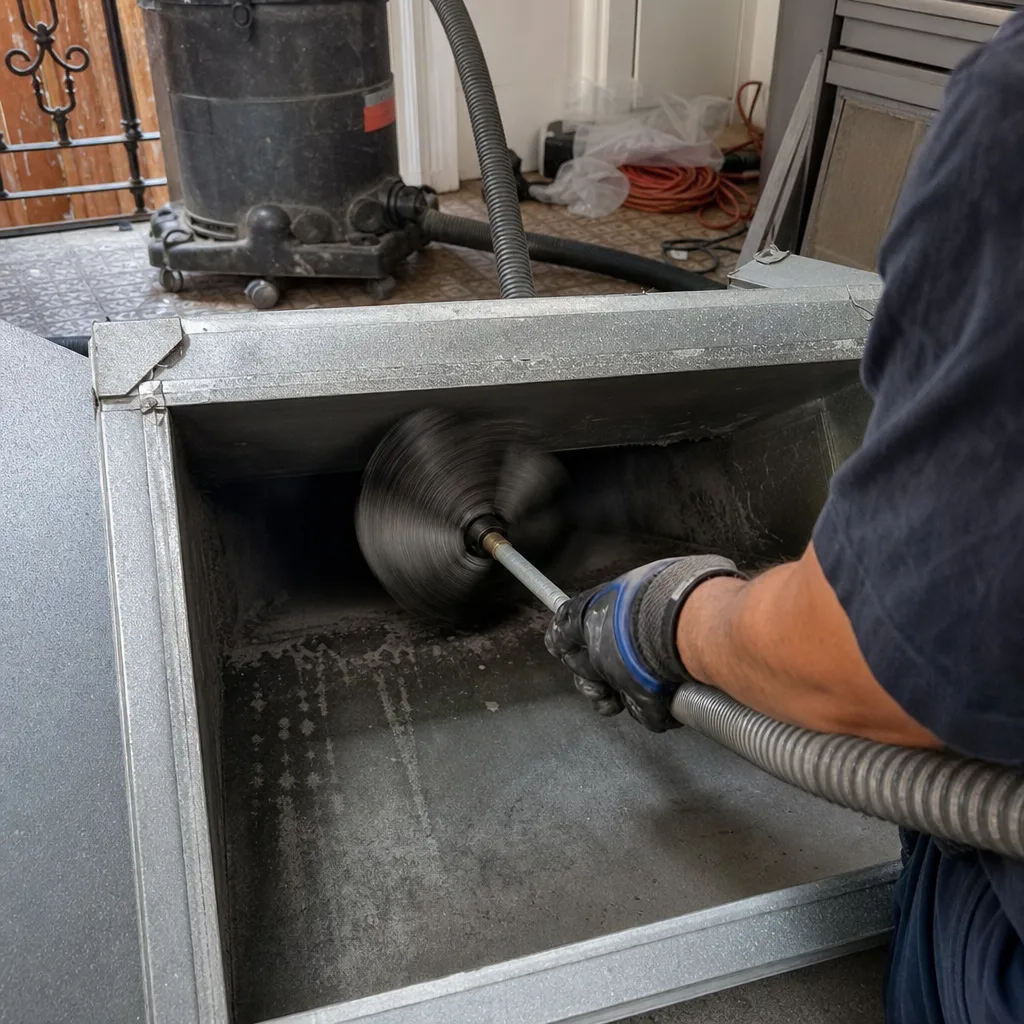
Cleaning has limits here. A Rotobrush rotary-brush system with a Nikro HEPA vacuum running negative pressure can dislodge and capture surface contamination. But if the flex liner itself is saturated, stained, or deteriorating, no amount of brushing restores it. The correct fix is section replacement: cut out the affected flex, install new properly insulated duct, and restore airflow with clean material.
We mention this honestly because it matters. A homeowner who has been told three times that the smell is “just dirty ducts” deserves to know that the real answer might be replacement. That is the difference between treating the source and treating the symptom.
The Redondo Beach Humidity Factor: Rust Pinholes in Metal Trunk Lines
Redondo Beach has a specific climate challenge that many homeowners never connect to their HVAC complaints: persistent humidity. The air here holds moisture far more consistently than inland Southern California cities. That humidity works its way into attic spaces, crawl spaces, and the ductwork itself.
The failure pattern we see most often is rust pinholes forming in older galvanized metal trunk lines. Here is how it happens: cool air moves through the trunk, the exterior of the duct sweats in the humid attic air, and that condensation sits on the metal. Over years, the galvanized coating breaks down at seams and low points. Pinholes form.
A rust pinhole does not usually leak water. It leaks air pressure. The small holes bleed conditioned air into the attic before it ever reaches the rooms. The effect looks like weak airflow at multiple registers, but the blower is working harder than it should and the system is losing capacity through the shell of the duct itself.
This is one of the clearest examples of a problem that cleaning cannot solve. You can brush and vacuum a rust-pinholed trunk line all day; the holes are still there. The solution is either sealing the affected section with proper mastic and mesh, or replacing the damaged segment. A camera inspection is what confirms which.
When Cleaning Alone Won’t Fix It: The Repair Threshold
We believe in source-removal cleaning. A Rotobrush rotary-brush system physically dislodges debris, and a Nikro HEPA vacuum captures it at the source under negative pressure. That combination is the professional standard. But there is a threshold beyond which cleaning is the wrong tool, and a competent contractor should tell you that before you spend the money.
Here is that threshold, plainly stated:
- Disconnected duct: Cleaning does not reconnect it. The room still gets no air.
- Collapsed flex: Cleaning cannot un-collapse a crushed duct wall. The airflow restriction remains.
- Rust-pinhole trunk: Cleaning does not seal pressure leaks. Conditioned air still bleeds into the attic.
- Return-side breach: Cleaning does not stop unfiltered attic air from entering the airstream.
- Saturated or deteriorating flex liner: Cleaning does not restore a compromised liner. The smell and growth return.
In each of these cases, the correct fix is air duct cleaning combined with targeted repair. The sequence matters: repair first, then clean the remaining system so the new section starts clean. Our crews handle both, which means the repair is not farmed out to a separate contractor with a separate schedule and a separate invoice. One crew identifies the failure, fixes it, and cleans the system around it.
What You Can Check Yourself Before You Call
Not every duct complaint requires a service call, and a homeowner who knows what to check is a smarter customer. There are a handful of inspections you can do in a Redondo Beach home without professional equipment. Here is what is worth your time:
- Check the filter first. A filter that is completely loaded with dust strangles airflow to every room. Replace it if it looks caked, then run the system for an hour and see if the complaint improves. This is the single most common false alarm we hear about.
- Walk the rooms and compare register airflow. Hold your hand at each supply register with the system running. If one room is dramatically weaker than others, you have a flow problem in that branch, not a whole-system dirt problem.
- Look at the return grille. A return that is covered by furniture, boxes, or a closed louver door starves the whole system. The return needs clear space to pull air.
- Check visible flex duct in the attic. If you have attic access, look for any duct that is kinked, pinched, or visibly sagging between supports. Flex duct should run in wide, smooth curves. A sharp bend is a choke point.
- Listen for rushing air where there should be none. A hissing or whistling sound from an attic space or wall cavity when the system runs suggests a leak that needs professional sealing.
What you cannot check from a ladder is what happens inside the duct under actual operating pressure. Negative-pressure testing with a HEPA vacuum, camera inspection of interior walls and joints, and airflow measurement at the register all require professional equipment. A homeowner can spot a kink; a contractor can spot a breach that is invisible from the attic. For the full picture, Redondo Beach homeowners can call us and we will walk through what we can see with a camera.
Why a Camera Inspection Beats a Blind Cleaning
Imagine taking your car to a mechanic who never opens the hood. They hook up a hose, run some solvent through the engine bay, and hand you a bill. That is what a blind duct cleaning is: an agitation-and-vacuum pass with no visual confirmation of what was inside, where the failure is, or whether the problem is even addressable by cleaning.
A camera inspection changes the entire conversation. We run a small, high-resolution camera through the duct system before any cleaning begins. The images show what is actually there: accumulated debris, a disconnected joint, a rust-pinholed trunk, a collapsed flex run, or growth on a liner. We know what we are dealing with before we touch it.
This matters for two reasons. First, it means we do not sell you a cleaning when the fix is a repair. Second, it means we can verify the result after the work is done. Before-and-after photos of your own ducts are part of how you know the job was real. Deploying Abatement Technologies air filtration on-site during the work keeps dislodged material from recirculating into your living space while the system is being serviced.
The equipment names are not decoration. A Rotobrush rotary-brush system physically dislodges debris from duct walls. A Nikro HEPA vacuum captures fine particulate at the source under negative pressure. These are the same tools commercial HVAC contractors use, and they are what allow us to find and fix the specific section that is causing your specific complaint, rather than treating the whole system as one big dirty mystery.
Common Mistakes to Avoid
- Replacing the filter and ignoring the return side. A new filter does nothing if the return duct is pulling attic air through a breach downstream. The filter only cleans what passes through it, and leaked air never passes through it.
- Cleaning ducts to fix a collapsed flex run. If a room is not getting air, the duct is likely damaged, not dirty. Cleaning the rest of the system will not change that room by one degree.
- Treating every room as one problem. Redondo Beach homes often have one failed zone and several perfectly fine zones. A whole-system cleaning addresses the fine zones and misses the failure unless inspection is part of the job.
- Believing a low per-vent price. The bait-and-switch duct cleaning model quotes a teaser number, then invoices a far larger amount once the van is on the drive. A professional cleaning quote is a whole-system price agreed before work starts.
- Ignoring a musty smell because it is intermittent. Microbial growth does not get better with time. It gets established. The longer a wet flex liner sits, the more likely section replacement becomes.
- Cleaning ducts before fixing a roof or plumbing leak. If the moisture source is still active, any cleaning is temporary. Fix the water, then fix the ducts.
See the difference
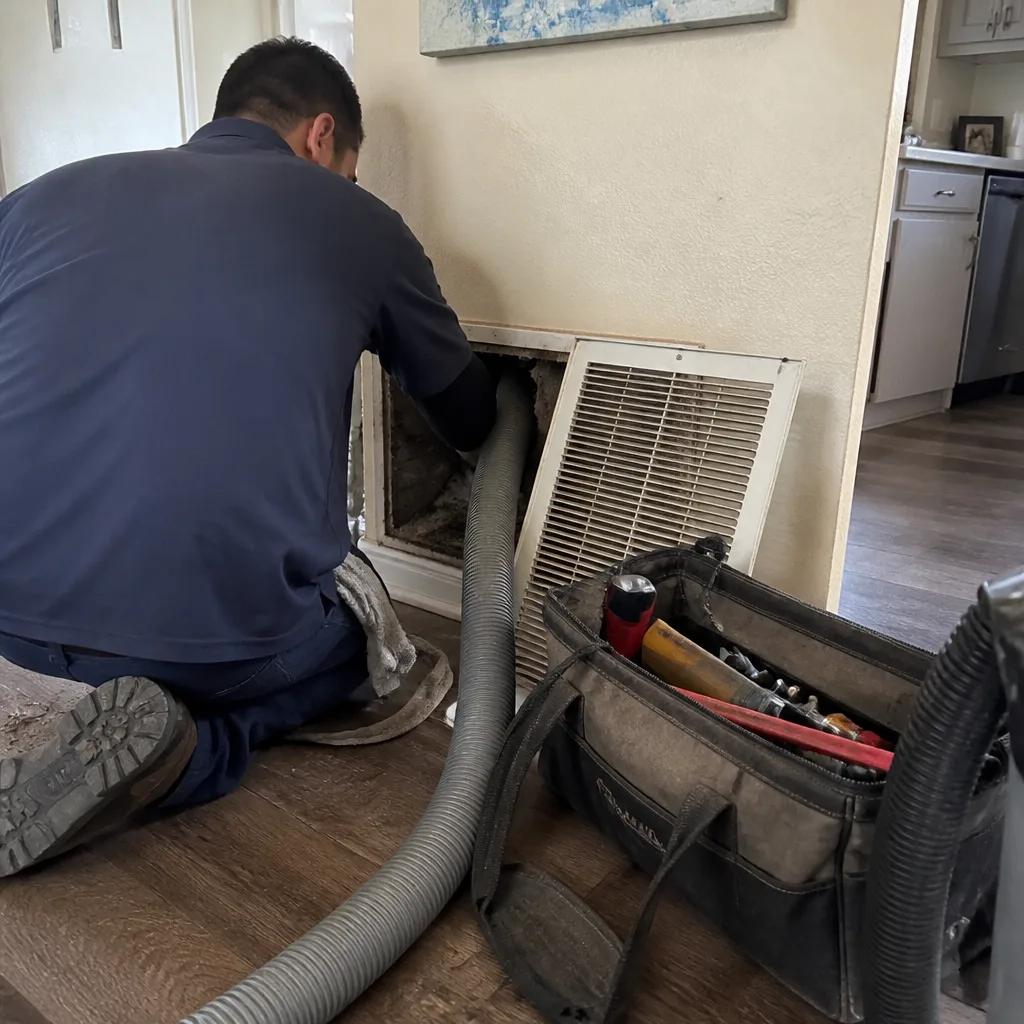 Before
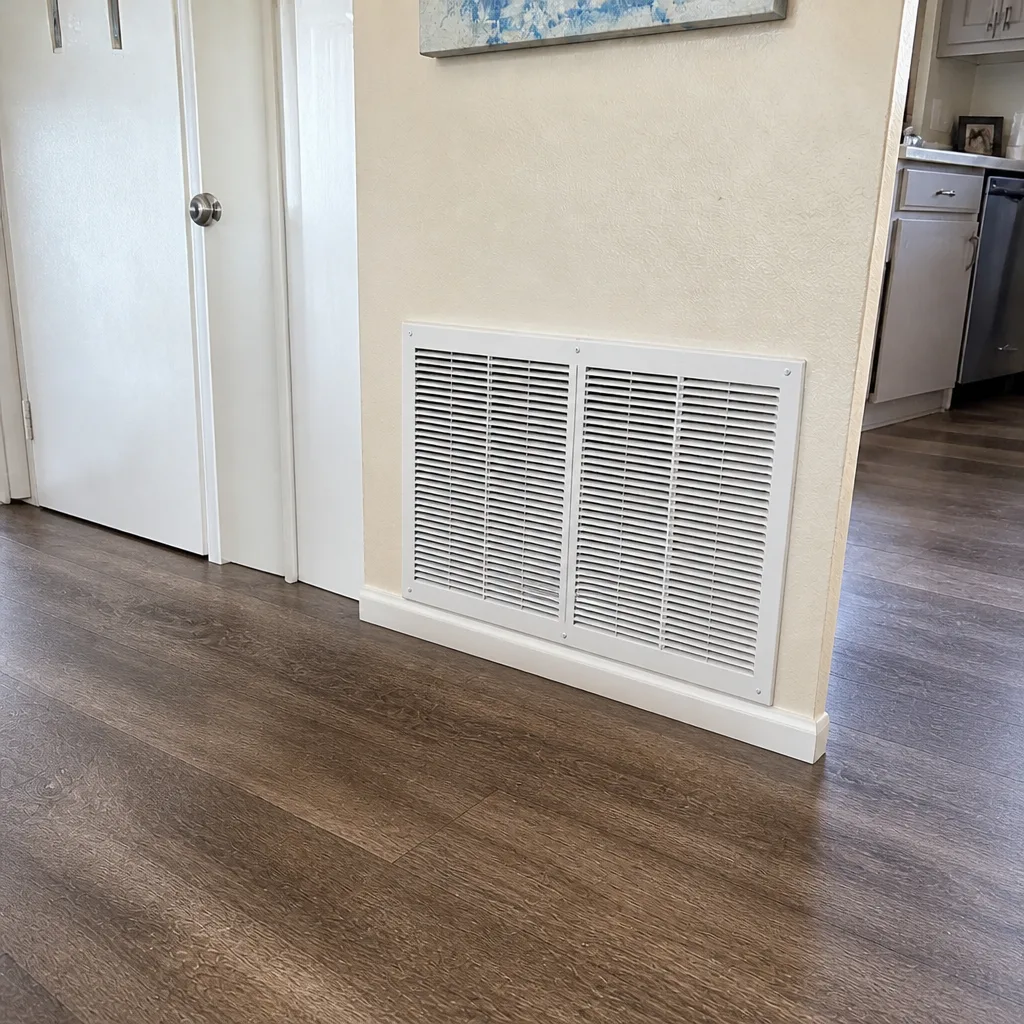 After
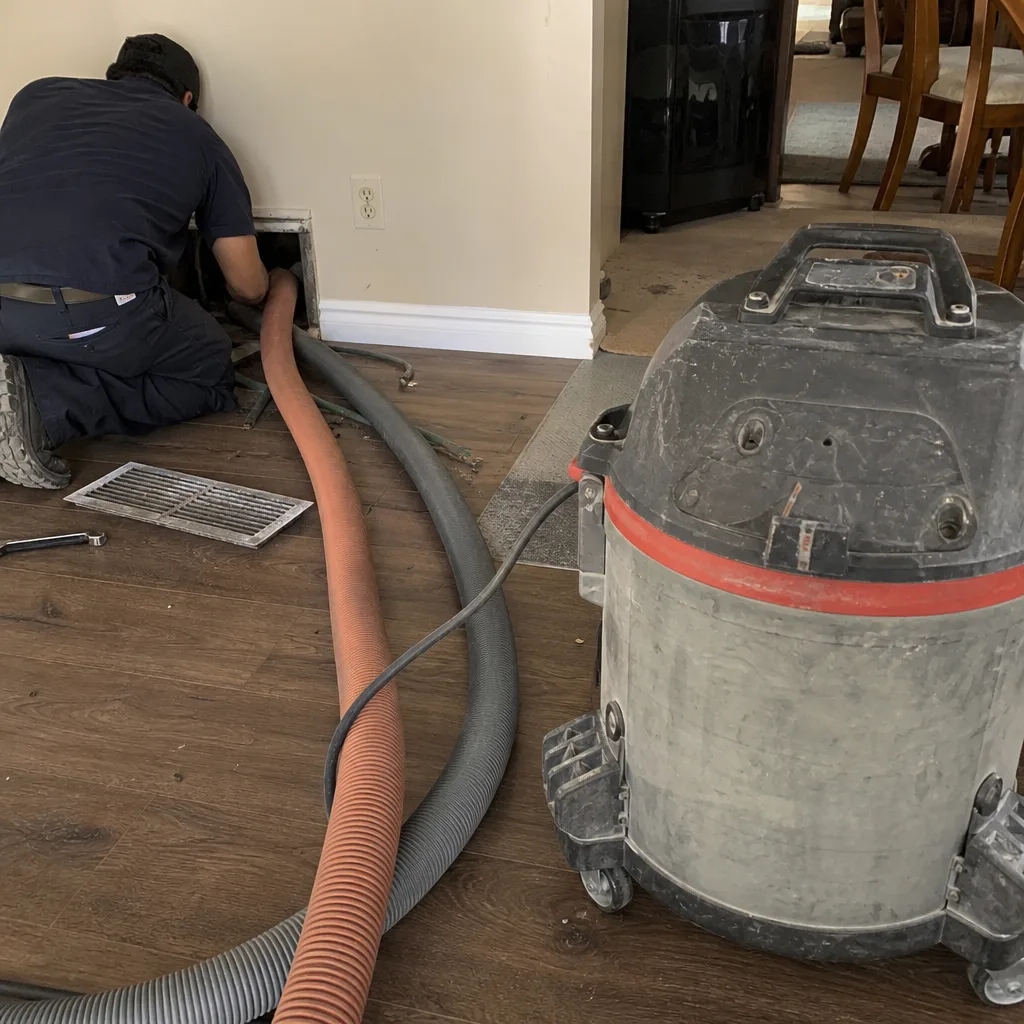 Before
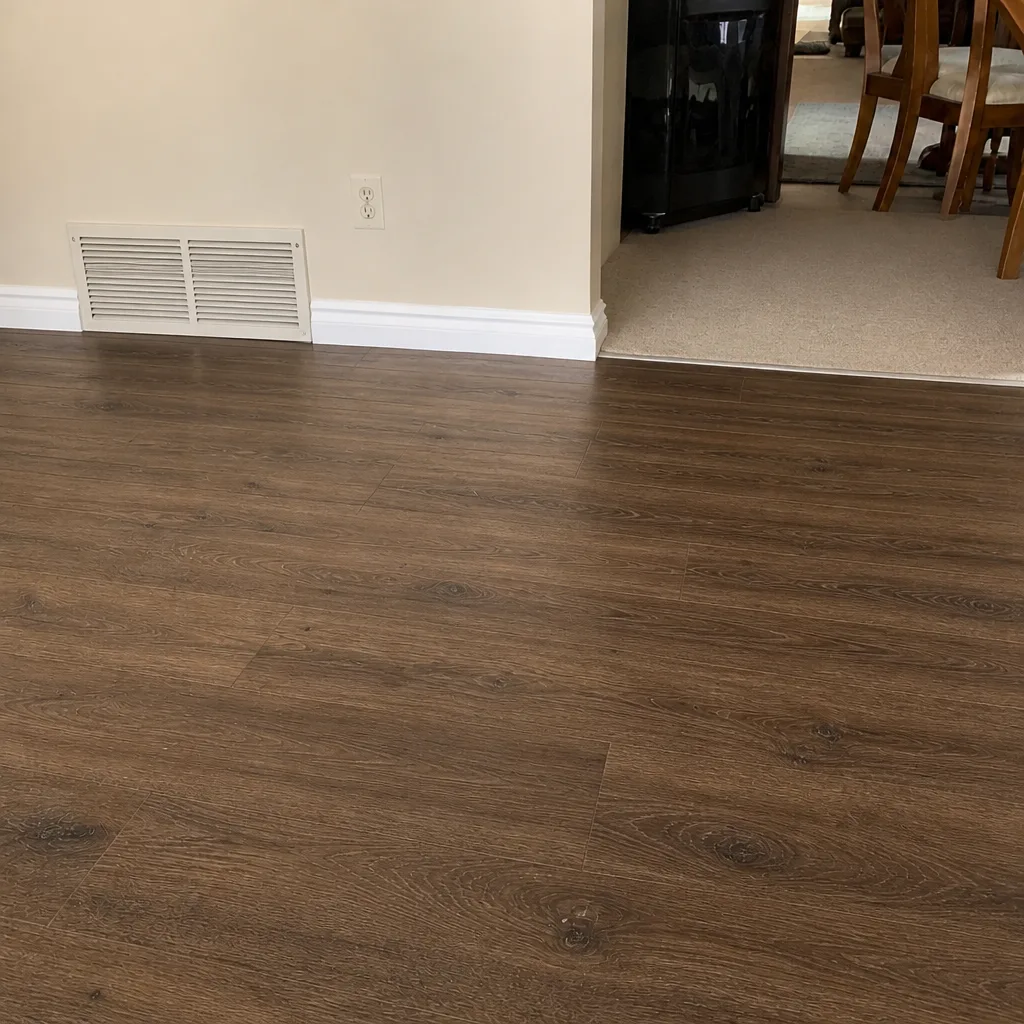 After
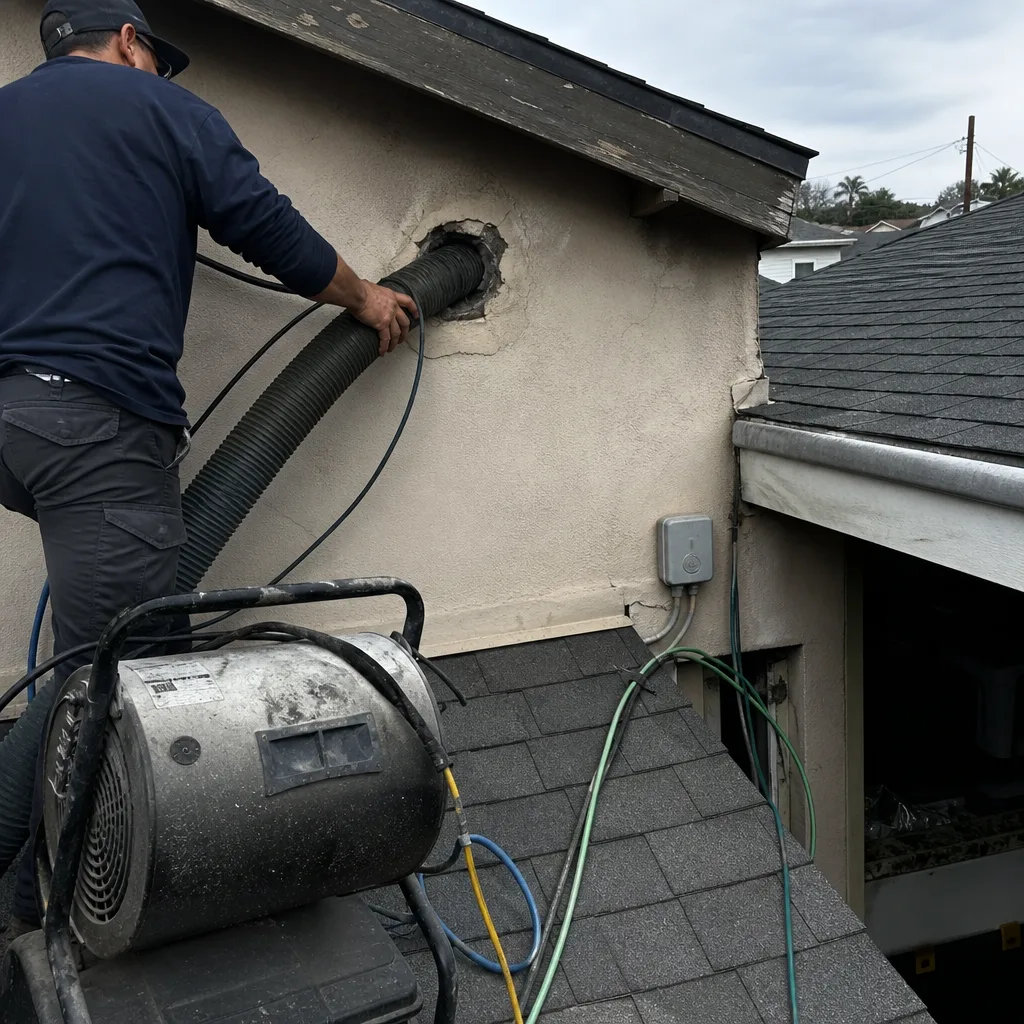 Before
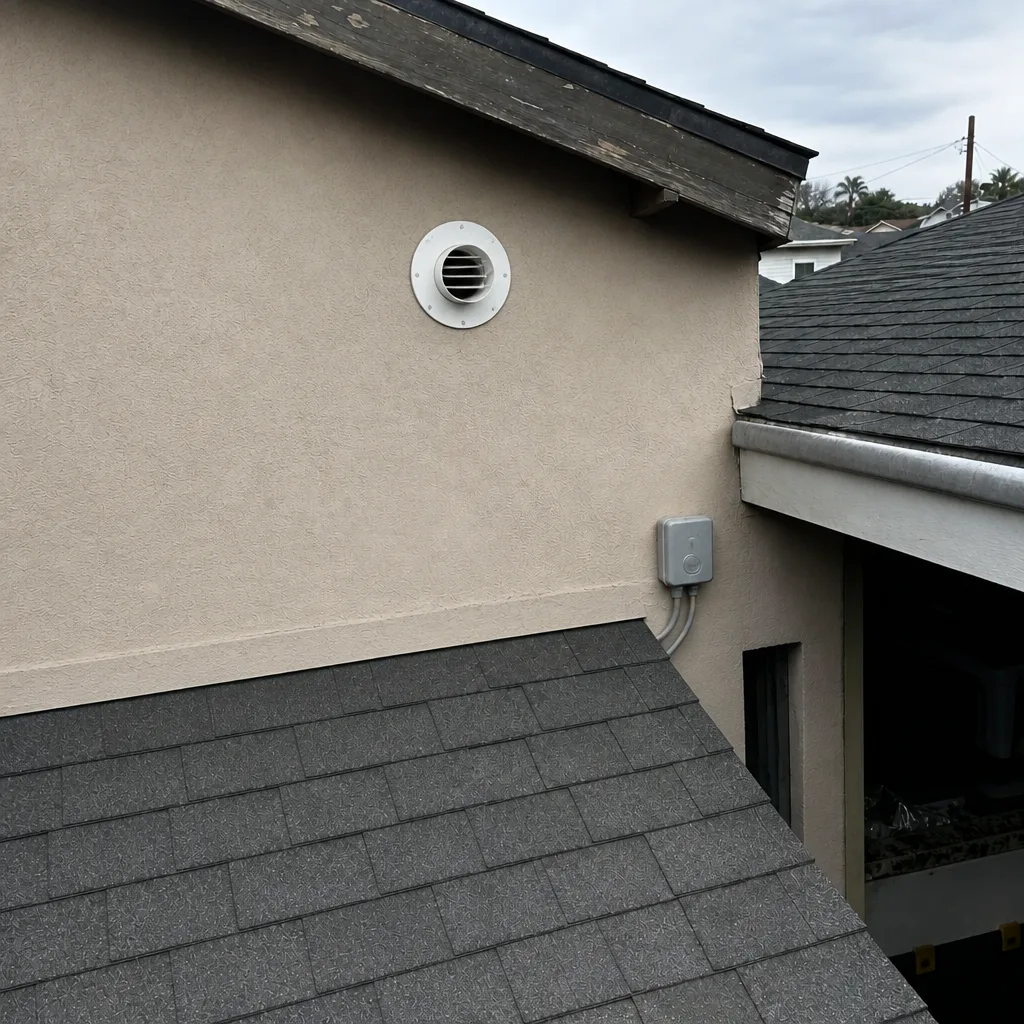 After
When to Call a Professional
Call when the symptom persists after you have replaced the filter and confirmed the return is unobstructed. Call when one room has dramatically less airflow than its neighbors, because that is a structural failure, not a dirt problem. Call when a musty smell returns after a previous cleaning, or when dust keeps accumulating despite a clean filter. Each of these suggests a mechanical cause that requires camera inspection, negative-pressure testing, and the right repair. Duct Cleaning Redondo Beach offers free estimates in Redondo Beach. Call (877) 358-4828. We answer 24/7. Fast dispatch from 7am to 7pm, Sunday through Friday.
Frequently Asked Questions
Uneven airflow between rooms, persistent dust on furniture, and musty odors that appear only when the HVAC runs all point toward specific mechanical failures like collapsed flex, return-side leaks, or liner growth rather than uniform dirt. A camera inspection is the only way to determine which section failed and whether cleaning, repair, or replacement is the correct fix.
A single room that never reaches temperature typically has a disconnected, kinked, or collapsed flex duct serving that register, meaning conditioned air is not actually reaching the room. The fix is repair of that specific branch, not cleaning of the entire system. Call (877) 358-4828 to have it camera-inspected.
Persistent dust on furniture and vents most often comes from a return-side duct leak that pulls unfiltered attic air into the airstream downstream of the filter. The breach must be located and sealed, because the dust bypasses the filter entirely and will keep returning until the joint is repaired.
Only if the source is surface contamination. If the flex duct liner is saturated with moisture or deteriorating, microbial growth has established in the material itself, and the affected section must be replaced. A professional with camera inspection can tell which applies before any work is done.
Pricing is set per job by the written estimate after a camera inspection identifies the scope of work. The estimate is free, and the correct comparison is between a blind cleaning that misses the failure and a source-removal job with repair that fixes it. Call (877) 358-4828 for an exact quote.
Look for a rotary-brush source-removal system like Rotobrush, paired with a HEPA vacuum like Nikro running negative pressure, and on-site air filtration such as Abatement Technologies to contain dislodged material. Consumer-grade equipment cannot physically dislodge bonded debris or capture fine particulate at the source.
The Bottom Line
Duct problems in Redondo Beach are rarely whole-system problems. They are local failures: a collapsed flex run, a disconnected boot, a rust-pinholed trunk, a breached return seam, or a saturated liner. Each maps to a distinct symptom, and each requires a distinct fix. The value of a professional is not in running a brush through every duct. It is in locating the failed section, repairing it if needed, and cleaning the system with equipment that actually removes debris at the source. If you have been guessing, stop guessing. Get the camera in the duct and find the real problem.
Written by the team at Duct Cleaning Redondo Beach, serving Redondo Beach since 2017.